Showing posts with label medical. Show all posts

February 23, 2022

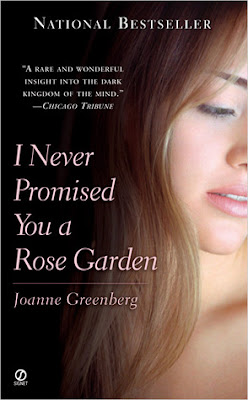
I Never Promised You a Rose Garden, by Joanne Greenberg


I Never Promised You a Rose Garden, by Joanne Greenberg

4 stars: Painful but revealing.

Deborah Blau is severely mentally ill, in a time before mental illness was truly recognized or able to be treated effectively. Her desperate parents take her to an asylum, but they can hardly stand to leave her there. Nevertheless they do, and her treatment begins. 

Most of the book is from Deborah's perspective, living in the asylum and meeting with her doctor. There are occasional glimpses from the doctor's perspective, her parents', and even her little sister's. With the help of her doctor, Deborah claws her way back to reality, from the fictional world she has built for herself inside her mind. It is not pretty or linear, but slowly, healing begins.

* * * * *

I was struck by a couple of things in particular: the insistence on telling the absolute truth to those suffering with mental illness. This was mentioned several times throughout the book. Deborah felt such a relief when the doctor told her that she was very sick. Finally! Deborah knew she had problems her whole life, but had constantly been told she was fine--i.e., lied to. It was so validating to her for her doctor to acknowledge her illness. Complete honesty also helped later on, when Deborah was closer to coming back to the real world. This is where the title comes in--it's a quote from the doctor to Deborah. Being cured or achieving mental health is not all happy and easy.  

Another thing was the difference in treatment between then and now. At least from this book, it seems back then there were many physical treaments used--from shock therapy, to isolation, to the wet bedsheet treatment, but the only medication available were the sedatives. They of course, also had talk therapy as well. Now there are medications specific to the illness--I don't know how effective they are, but hopefully at least it's another tool that can help.

Finally, her descriptions of looking out on those in the "normal" world were poignant. Just the feeling of otherness, and bewilderment. How do they manage day to day? They make it look so easy, when everything to her was such a big struggle. I've heard addicts say the same thing, when they're in the midst of their addiction. 

Along with that, Deborah's feeling of being invisible, even though she joined the church choir and another group--that no-one spoke to her or even seemed to see her, once she was trying to become a part of society again. So different from the top floor of the asylum, where she didn't have to pretend to be someone she wasn't, and she was seen for who she was.   

Content: For adults. Quite a bit of language, including some crude sexual references. Self harm and violence.

February 16, 2021

For the Armchair Adventurer

 Two of the books I've read recently have been about daring and adventurous escapades: Mystery of the Nile and Mountain Rescue Doctor.

Mystery of the Nile: The Epic Story of the First Descent of the World's Deadliest River, by Richard Bangs and Pasquale Scaturro

4 stars: My inner armchair adventurer was satisfied.


Many people have attempted to go down the entire length of the Nile River, and several have died in the attempt. Pasquale Scaturro and his little band of explorers finally made it!

They started way up in Ethiopia, where it was really just a trickle, down spectacular and dangerous waterfalls and rapids, and past crocodiles, hippos, bandits, and soldiers.

* * * * *

This was a great read, especially coming on the heels of our homeschool study of Ancient Egypt, and the surrounding regions. The adventure wasn't all exciting rafting through dangerous waters. A good portion of it was baking hot and boring, with the main threat coming from Sudanese militia and river side bandits. 

It was interesting to get a glimpse of the interpersonal dynamics of the group, as well. Shared danger doesn't necessarily bring about close friendships, and Bangs pulled no punches discussing the problems that came up between Scaturro and his fellows. Satisfying ending, though--realizing that reaching an enormous milestone like that is as much a mindset as anything else. Preparation and the right equipment can only get you so far. At some point you may need a "fixer" to get you signatures or the needed paperwork, or just the wife of a inn owner that knows a general. It wasn't all just physical skills needed, is what I'm saying. People skills, negotiation, keeping your team from throwing each other to the crocodiles--all of that was part of it, too.

Content: Some language.


Mountain Rescue Doctor: Wilderness Medicine in the Extremes of Nature, by Christopher Van Tilburg

4 stars: Stories to talk about with my teenager.


Tilburg has forged his own path in the medical community, combining a love of outdoor sports with opportunities to help people in trouble. An ER doctor as his "day job," plus an avid hiker, biker, and skiier himself, he is well prepared physically and mentally for the rigors of rescuing those who have slipped or strayed off the beaten path. 

Exciting stories of his work up in the mountains. Extremely challenging situations and dedicated volunteers at the ready for those who get hurt or sick or lost. Reading this, I was so grateful for Tilburg and others like him, who are willing to risk so much to help people that cannot help themselves.

My oldest son read this at the same time as me, and we had a good time talking about the various stories.  


July 13, 2019

Mini Theme: True Medical Mysteries

I really enjoy books where a medical case is presented, and then the doctor has to try to figure out what in the world is going on with that patient. The hope is, of course, that they do figure it out in time to save the patient. True stories--just to be clear.

If this type of book sounds interested to you, read on! I have a handful to get you started.


Every Patient Tells a Story: Medical Mysteries and the Art of Diagnosis, by Lisa Sanders

4 stars: Problems and perils of diagnosing patients, with interesting case studies to back up her points.

As the title would suggest, this book is from the POV of the doctor. Sanders says in the introduction that she hoped to put readers right there at the bedside, with the clues (symptoms) presented and the knowledge or lack thereof that the doctor has to go on in order to find the correct diagnosis. As such, it is broken into sections based on the parts of a physical exam: the patient's history, the actual physical exam, technology/testing, and what she calls "Limits of the Medical Mind." Each section has chapters within it delving into more detail about the various aspects of that method of diagnosing patients, along with case studies of real patients.

* * * * *
I found this one fascinating. Then again, I also like to read my husband's medical journals when they come in the mail. There are so many variables standing between the sick patient and the saving treatment, including: the way they tell their story to the doctor (do they leave out crucial details or tell so much that the important stuff gets lost), what symptoms are presenting at the time of the exam, what the tests show or don't show, and so on.

I was reminded again of the importance of networking amongst doctors. Many of these difficult cases were solved by the doctor/s calling up a friend who was a specialist in that field, or even just another doctor with a lot of experience, and running the case by them to get some feedback. Often it was the collective memory of knowledge that came to the right conclusion, more so than one particular doctor.

(3/12/18)
If you liked this one, I've got 2 more for you!

The Medical Detectives, below, is more about epidemiologists figuring out what has caused clusters of severe illness, rather than individual cases, but still fascinating.


The Medical Detectives, by Berton Roueche

3 stars: Stories you'll want to tell someone else about! (Though maybe not over dinner...)

A compilation of 25 different unusual medical cases. A handful are presented as the doctor trying to figure out what could be causing certain symptoms, but with most, the disease is known and it's up to epidemiologists to track down the specific cause along with who else might be affected--or infected, as the case may be. 

Somewhat uneven writing between chapters, with some very slow and tedious to get through (particularly the chapter about aspirin) and others high interest to the end. Since they span decades, I suppose it was to be expected. 

I ended up retelling many of the stories to my kids. They clamored for more! In fact, my 8-year-old picked it up to read on his own, but got bogged down a chapter or two in. I guess you can tell there's a strong medical influence in our home! 

Also, wash new clothes before you wear them. Just...do it. Please. Thank you.

(01/06/17)


It has been almost 10 years since I read this one, so I can't tell you what angle it takes. I do remember that I liked it--perhaps this was the catalyst to my seeking out these others!


The Man Who Mistook His Wife for a Hat and Other Clinical Tales, by Oliver Sacks

4 stars: Fascinating.

I had to keep discussing the case studies with my husband just to be able to tell someone. I would recommend skipping all the introductions (there's one for each section), unless you're very interested in the author's research and networking with other doctors.

**My reviews were much shorter back in the day! :)

What have you read that would fit in with this Mini Theme? I'm always up for another!

March 5, 2018

Obituary of a Reader + Being Mortal, by Atul Gawande

My mom ran across this obituary in the Logan Herald Journal and called me up to tell me about it.


Beula May Sorenson Worthen
(died at age 90)

I read; I wed; I bred; I fed; I read; I led;
I read, read, read; now I'm dead.

Apparently she wrote this single-sentence summary of her life before she died. What a hoot!

[A full obituary follows, with a few more details about family and such. It also mentions that during one of her later years in life she read 478 books!]


Is this what your obituary will say someday?  I think for mine it would have to say something about flowers in there too. Hmm, except that doesn't rhyme. Better get to work on that!


I suppose while we're talking about such things, we may as well talk about this book:


Being Mortal: Medicine, and What Matters in the End, by Atul Gawande


5 stars: This should be required reading for every family.

I am glad I decided to buy this book! It was every bit as good as I had heard. Gawande--a surgeon-- talks about how our medical system is broken when it comes to end-of-life care. Often quality of remaining life is sacrificed for trying one more thing or doing one more surgery. He goes into the history of nursing homes, and the rise of assisted living centers and senior communities. He also talks quite extensively about hospice care--the one part of the industry that seems to be getting things right.

A palliative care specialist gave him a list of questions to ask to get at the heart of what someone wants the end of their life to be like. These are hard questions to ask, but they bring much-needed clarity, and allow for healthcare decisions to be made by others, should the person in question be unable to do so. Gawande tells the story of the end of his Dad's life, and at one point talks about the hard conversation they had revolving around these questions.

Here they are:

1. What is your understanding of your condition and prognosis?

2. What are your concerns or fears about what lies ahead?

3. What kinds of trade-offs are you willing to make or not willing to make to try and stop what is happening to you?

4. What are your goals for the time you have remaining; how do you want to spend your time if your health worsens?

5. Who do you want to make decisions if you can't?


In the case of Gawande's father, also a doctor, he knew his condition (from a spinal cord tumor) and prognosis were worsening. He was becoming paraplegic. He worried about becoming a burden on his wife. His goals were to finish his Rotary responsibilities and make sure the college he had started back in India and his family were going to be all right. As far as trade-offs went, he most emphatically did not want to be completely paralyzed from the neck down, on a ventilator, requiring constant care for every basic need.

This conversation became very important in the middle of the surgery on his dad's tumor, when the surgeon came out and explained that his dad's heart had gone into an abnormal pattern. Should they stop the surgery or keep going? Gawande, recalling his dad's answers to the Hard Questions, asked one of his own to the surgeon--which option would make it more likely that his dad would end up completely paralyzed--stopping or continuing? "Stopping," was the answer. So Gawande instructed him to keep going with the surgery.

He talks about the importance of hope, but also the importance of looking reality square in the eyes and preparing for it. Most cancer survival outcomes, for example, follow a curve with a big hump in the middle--be it months or a couple of years, depending on the type--and a long skinny tail going off to the right of the chart. Meaning, a handful of people manage to survive years and years, but most do not. Medicine, however, is bent on chasing that tail--at all costs. Unless the patient puts a stop to it.

It's hard, because no-one wants to be the dream-crusher; and we know positive thinking can do amazing things for the immune system. So, many times doctors are not as clear as they could be when discussing potential harm/benefits from various treatment options, leaving the patient to hope falsely, or to put more stock in a treatment than they should.

I want my husband to read this and give me his take on it, as one in the medical profession.

Have you read it? What did you think?

September 28, 2017

Tom's River, by Dan Fagin, and What It Brought to Mind...

A preview for my upcoming Mini Theme: The Perils of Greed. As I was writing up this review, more and more connections to other books came to mind, so in the end I decided it needed its own space. Never fear, though, I will link back to it for the Mini Theme. Sadly enough, greed played a huge role in the pollution problem in Tom's River continuing on and on.

Let's get right to it!

First off, I really like this cover. The river, plus the water tower in the background--some nice foreshadowing going on there.


Tom's River: A Story of Science and Salvation, by Dan Fagin
Pulitzer Prize Winner for General Nonfiction, 2014

3 stars: A lot of good information to process here.

When the industrial resins and dye-making company, Ciba-Geigy, first set up their factories in Tom's River, no-one really cared what they did with the waste. Local families were happy for the jobs the company provided, which paid some of the best wages in the area. There was a lot of waste to dispose of, much of it highly toxic, but their operations were surrounded by acres of land. They dug big pits for dumping solid waste, (some of it in barrels, some not) and poured the liquid waste right onto the ground. The sandy soil sucked it up very quickly. Problem solved.  Some of it was also put directly into the river, and some was put through a pipeline into the ocean.

Over the years, the pollution got into the groundwater and even was pumped into the public water system at one point in the 1980's. Ciba-Geigy and Tom's River Water decided together that the public didn't need to know. After all, it was for a relatively short period of time.

Meanwhile, cancer kept cropping up in the area, particularly in children. One mother, whose son had been diagnosed as an infant and who still lived against all odds, even began putting pushpins on a map every time she heard of a new case. She organized a support group for parents of children with cancer, called Oceans of Love.  Parents pushed for a government study to prove that there was a cancer cluster happening in Tom's River, and taking it one step further, that pollution from Ciba-Geigy was the culprit. However, it wasn't until a pediatric oncology nurse noticed a strangely large proportion of her patients were from Tom's River, that the wheels started slowly turning for a study. She happened to tell someone who happened to know who go to, and so on.

Unfortunately, it would be harder to prove than anyone could have guessed.

* * * * *
This one took me quite some time to read. It was quite dense. I was saddened and disgusted by the way those with the power in the manufacturing company consistently put profit margin over health and safety concerns. Also, by the government officials who continually looked the other way, and allowed Ciba-Geigy to police itself in environmental matters, effectively continuing the problem for decades.

There were many side forays into various topics, all of which were enlightening, except perhaps the part about statistics. That was just aggravating--as it was for all involved with it at the time, apparently. The evidence of their eyes and experience were pointing to one thing, but it was nearly impossible to get the numbers to "prove" it one way or the other. Yes, deeply frustrating. I will never be a statistician. I can feel my blood pressure going up just thinking about that part of the book again.

One other note before moving on: using the word "salvation" in the title was a bit misleading. I'm not certain who Fagin thought were saved. Certainly not the families of Tom's River, unless he was referring to all the activist efforts that eventually got the plant shut down. That area will be dealing with the ramifications of all the toxic waste for years to come.

(Finished reading Sept. 12.)

One thing I enjoy about reading this book was that it kept bringing up connections in my mind to other books I've read. So let's talk about those for a moment.


Fagin talked quite a bit about cancer, mostly from a historical perspective. He discussed some newer advances and some of the biology behind it as well.

If that part was fascinating to you, you will love The Emperor of All Maladies: A Biography of Cancer, by Siddhartha Mukherjee. Follow the title link for my review of this book, read in June of 2016.


Another rabbit trail to follow is the one on epidemiology, or finding the source and cause of infectious diseases in large populations. With cancer this can be particularly difficult (and it doesn't exactly fall under the umbrella of epidemiology anyway as it isn't infectious), but it's roughly the same idea, particularly when it comes to cancers caused by environmental triggers. Interviewing those affected, trying to find similarities, etc. Fagin discussed the basics of the field.

If you wanted more examples and case studies, give The Medical Detectives, by Burton Roueche, a try. (Title links to my review from January 2017.) It is all about epidemiologists working out what caused certain clustered bouts of illness. If only those working on the Tom's River cancer cluster case could have found definitive links like in this book.


Along those lines, Fagin told the story of London's cholera epidemic and the work of those responsible for figuring out the source and cause. That reminded me of a book I had read exclusively on that topic, read 9 years ago:


The Ghost Map: The Story of London's Most Terrifying Epidemic--and How It Changed Science, Cities, and the Modern World, by Steven Johnson.

4 stars: This is one our book club read and discussed. I highly recommend it.

This is the story of London's deadly cholera epidemic of 1854, where more than 700 people died within 2 weeks. But more than that, it is the story of a doctor with an unfailing commitment to figuring out the cause of the outbreak--even though what he finds goes against the prevailing opinions of his time--and a local priest who teams up to help prove it. Johnson then adds an additional layer, weaving the outbreak, and the people involved into a broader historical context.

Informative, with lots to think about and discuss.


(Originally reviewed on Goodreads, August 2008)


Finally, Fagin mentioned in passing the HeLa cells and how they furthered science. Well, it just so happens that I've read a book about that, too!


The Immortal Life of Henrietta Lacks, by Rebecca Skloot

4 stars

In the late 1940's a black woman with cancer went to John Hopkins for treatment. Without her knowledge or consent (not at all uncommon at the time) they took a sample of her cancerous cells and attempted to grow them in a test tube. Unlike every other attempt at growing human cells, hers kept growing and multiplying, producing a new generation every 24 hours. 

Henrietta did not survive her cancer. Her cells, however, didn't just survive--they thrived. Enough so that they were sent all over the world for research and a factory was built simply to produce and ship more HeLa cells to scientists and researchers all over the world. Her family didn't even find out about their mother's cells or their many uses in research for several more years.

Skloot spent years researching this book, including the history of the Lacks family, and the nuances of the ethics of cell research. Who has ownership of your cells/blood/tissue samples? If money is involved (and it usually is) who does it belong to? How does all this effect research?

Full of interesting questions, clear writing, and a warm look at this family and the way they've struggled with their mother's immortality.

(Originally reviewed on Goodreads, October 2011)


* * * * * *
Okay, I think that was all the connections. A whole list of good reading to do here, if you're interested! If you do read any of these, let me know! I would love to chat with you about them.
June 13, 2016

The Emperor of All Maladies, by Siddhartha Mukherjee


The Emperor of All Maladies: A Biography of Cancer
by Siddhartha Mukherjee

3.5 stars: Packed with fascinating details, grim facts, and people dedicated to helping others.


Mukherjee was an oncology resident as he was writing this book, which in itself amazes me. How in the world did he find the time?  It goes into depth on many aspects of cancer, including historical references to it, and the many people involved in reaching our current understanding of it.

The 1960's War on Cancer gets several chapters--along with the aftermath of that big push. The more hopeful news is that new drugs and new developments continue to be made--and made available--to the public relatively frequently these days. The not so great news is that even with all the progress that has happened, for many types of cancer, time left is still measured in weeks or months, not years. I thought it was very interesting that with some forms of cancer, being in remission at 5 years out is considered essentially a cure.

I wish I had a better memory for names, because this book was chock full of people: scientists, doctors, surgeons, patients, pharmacists, politicians, and so on, who all had a hand in some key discovery or bringing something important into the public eye. I do tend to remember stories, so some of those have stuck with me. I feel so sorry for the women who had radical mastectomies back in the day. Wow. The metaphor of war seems particularly apt in reference to the patients--the human casualties in this whole thing. Every new drug, procedure, or idea had to be tested on someone, after all. (Often the patients themselves were begging to be guinea pigs--grasping at straws.)

There was a couple of fascinating chapters on Big Tobacco, and the push for (and against) warning labels on cigarettes--how that all came about. It saddened me how loss of profits also seemed to lead to loss of ethics for so many in those companies, particularly those in charge. Or perhaps it just brought to the forefront the lack of moral integrity that was already there to begin with. Right now I just want to say that I am so glad I don't smoke!! So many cancers are a direct result of smoking and tobacco use. (Not to mention all the other health problems they cause.)

As a reading experience, it was dense and long. I had to read a few chapters, then put it down and come back to it in a few days. Great bedtime reading--though! Interesting enough that I wanted to keep reading it, but not so thrilling that it ever kept me up past my bedtime!  It was just about perfect in that regard. I knew I could read it until my eyes started closing on their own, at which time it was time to be done. 

If you've got the time and the inclination, this is a good one! I really feel like I learned a lot.