Showing posts with label true tales. Show all posts

February 18, 2022

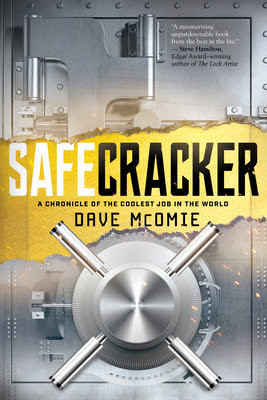
Safecracker: A Chronicle of the Coolest Job in the World, by Dave McOmie

This book was one I found browsing the nonfiction shelves at the library. It just seemed interesting, so I grabbed it. I'm glad I did! It was a good read. My 14 year old read it as well and also liked it.


Safecracker: A Chronicle of the Coolest Job in the World, by Dave McOmie

4 stars: Enjoyable, fast read.

 Dave McOmie's job is to break into safes and bank vaults. If the combination goes missing or has been forgotten, if the time clock gets wound too tight or something gets stuck, Dave gets a call and off he goes. He spends a lot of time travelling to his job sights, as most of them are far enough away to require an airplane flight. He has to bring his tools with him--drills, lots of extra bits of various sizes, and expensive scopes to look into the holes he has made. It's often a timed or high pressure situation. 

Between jobs, Dave is a dedicated family man and a philosopher at heart.

* * * * *

I found this fascinating. His job is one that rarely crosses my mind--but then again, I have never needed a safecracker. The book takes the form of "A Week in the Life," going day-by-day through the jobs required. He also tells stories of other jobs he has done, people he has worked with and for, and throws in some philosophy here and there. I enjoyed getting a glimpse into his life and perspective.  


Content: A little profanity, plus a couple of the safes had x-rated contents, which were mentioned but not graphically described.

May 1, 2021

All Thirteen: The Incredible Cave Rescue of the Thai Boys' Soccer Team, by Christina Soontornvat


All Thirteen: The Incredible Cave Rescue of the Thai Boys' Soccer Team, by Christina Soontornvat 

* 2021 Newberry Honor
* 2021 Robert F. Sibert Honor

5 stars: Excellent writing, on this incredibly high-interest topic. Very well done.

I remember when we first read the news articles about the Thai boys' soccer team that was trapped in a flooded cave. We were riveted, and horrified. From then on, we searched out any articles we could find and eagerly read the latest news and attempts to rescue them. We prayed for them as a family, every day. We were so worried about them. When we heard about the successful rescue, we were so happy and thankful. 

As soon as I heard about this book, I knew we needed to get it. I was not disappointed! I read it first, in one sitting. Then my oldest two children took turns reading it. This had all the answers to the questions we had asked each other those long months ago. It filled in the details that the news story didn't know or didn't share. It had pictures and background information on the boys, their coach, the rescuers, and other pivotal people involved. We learned how the cave flooded so quickly and why they couldn't just wait until the water drained away. We learned how they survived, physically and mentally, for so long. We learned about the rescuers, including the Thai Navy Seal who lost his life in the cave.

The sheer number of people involved in the operation was incredible to read about, especially all those who took it upon themselves to help in any way they could, with no thought of reward. And the way they finally came up with to bring them out, sedated. It was truly a miracle that it worked.

It was everything I could have hoped for in a book about this incident. We are going to buy this book for our own library. 

* * * * *

Were you as invested as we were in this story? Have you read the book? If so, what were your thoughts? 

April 2, 2021

Companion Reads: Longitude, and Carry On, Mr. Bowditch

 We read two books back to back in our morning reading time (for homeschool), which proved to be great companion reads. They both had to do with sailing and in particular, navigation at sea. Longitude, by Dava Sobel, was nonfiction, while Carry On, Mr. Bowditch, by Jean Lee Latham, was historical fiction. We understood the troubles of Nat Bowditch so much better, having just read an entire book about finding "lunars" vs. other means of calculating longitude, and even knew some of the technical terms.

If you have access to both of these books, give it a try and let me know if you liked it too!


Longitude: The True Story of a Lone Genius Who Solved the Greatest Scientific Problem of His Kind, by Dava Sobel

3.5 stars: Thorough and meaty. 

This one has been on my shelf for at least 5 years. I finally decided to read it to my kids as a way to make it first priority for me as well. Ha! It worked! We made it our way through it, a little each day.

For hundreds of years, the "longitude problem" was the bane of every sailor and captain's existence. It was easy enough to determine which latitude your ship was at, while at sea, but longitude was a whole different beast. Many, many ships sunk and thousands of lives were lost over the centuries due to mistakes in calculating longitude.

Finally the British throne came up with a competition, complete with a hefty award for whomever could solve this problem in a satisfactory way. There was a board overseeing the competition, which ended up going on for a couple of decades. The board members not only received the entries, but they were in charge of testing their accuracy and viability, and perhaps most importantly--doling out the prize money.

For a very long time, prevailing opinion was that the longitude problem would be solved by astronomy. Calculating "lunars" and/or the positions of certain stars became the basis of that school of thought. Then there was another idea completely: using a clock. It would have to be a clock like no other, however. It would have to keep nearly perfect time at sea, despite the constant motion of the ship, and have to be impervious to moisture and salty air.

As far away from astronomy as the workbench from the observatory, this idea was looked down upon by the Board as being almost too practical. Longitude was the realm of mathematicians and scholars, not something that could be solved with raw materials and rough hands--no matter how intricate the arrangement of gears and springs. It took the clockmaker in question--John Harrison--most of his life to perfect his creation and receive his just rewards.

* * * * *

This was actually a good read aloud for school mornings. I mean, I definitely felt smarter after reading it each day! Ha! Truly, though, it gave us some great fodder for discussion. We took it in smaller chunks, and although my kids weren't necessarily clamoring to keep reading each day, it got our minds working first thing in the morning, which was a good thing. That being said, this is definitely geared towards adults. I am fairly certain none of my kids would have picked it up to read on their own--or stuck with it, for that matter. It's well written, but it's got a lot packed in there.

Fascinating subject, really. There's so much that we take for granted about our modern life. GPS systems, anyone? Amazing how one person can make such a difference. One person approaching a problem differently, seeing a unique solution to the problem, then using his skills toward the solution, persisting through setback after setback. 

That was the biggest takeaway for me: do what you do best, persist through failure, and you will make a difference. It may not be solving the biggest problem of your time, but then again, maybe it will be. 

Now we want to take a field trip to go visit the sea clocks! 


Carry On, Mr. Bowditch, by Jean Lee Latham

* Newberry Medal winner in 1956

3.5 stars: Great way to visualize and bring to life the history we read about it Longitude.

Nat Bowditch grows up in a family that has fallen on hard times. His father, Habbukuk, used to be a sea captain until his ship was dashed into pieces. Since then he has become a cooper, but has never gotten past his failure at sea. There are many children and only just enough food and clothing to go around. He learns early (from his big brother Hab) to pretend like he doesn't feel the cold in the winter when he doesn't have a coat to wear.

Nat loves mathematics, which makes him unique in his family and at his school. His mind just takes to it, and he can understand and work out complicated problems from a young age. He has dreams of going to Harvard after school. Then his father indentures him to the ship chandlery in town for 9 years. Nine years! His life is over!  Or so he thinks. He doesn't realize it is the start of a lifetime of learning and opportunities. Also, he finally gets enough to eat and warm clothes to wear.

* * * * *

We read this book right after Longitude. It was a great tie-in to all the history we learned about in that book. The problem of finding longitude is one of the central themes of the book. Apparently this was the time period when chronometers (sea clocks) were available, but still very expensive, so most ships still used lunars--which involved taking the position of the moon in relation to certain stars and calculating longitude based on that. Nat's mathematical skill enables him to work "lunars" with extraordinary accuracy, and he even ends up teaching all the men he's sailing with how to work them as well. We highly appreciated the digs at Nevil Maskelyne, who was the rival and enemy of the clockmaker in our nonfiction book. So that part was fantastic.

I feel like the book was probably as accurate as historical fiction can be, so it was good to get a feel for what it would have been like to live back then, in a sailing town.

Here's the thing: so many people died! At first, it was a bit of a blow as we read along. By the end, my kids were taking bets on who was going to go next. It was so bad! I will not name names, but I will just say--do not get overly attached to any of the characters, particularly those who are closest to Nat. Since it was the story of a good portion of his life, the deaths are mentioned in a rather abrupt or cursory manner, then after a paragraph or two we're moving on.

Edited to add: We are not as heartless as we may seem. None of us realized as we read that Mr. Bowditch was a real person. That poor man! Wow. He overcame a lot of suffering. I can't imagine the author would have included all of those deaths if they hadn't really happened. It makes his accomplishments that much more incredible.

Favorite sayings: 

"sailing by ash breeze" --this comes up throughout the book, but it's explained early on. When a ship is becalmed, the only way to move forward is by "ash breeze," meaning--get out the oars and row! The oars were usually made of ash wood. Nat spends most of his life sailing by ash breeze, finding his own chances for learning, and studying on his own--everything he can get his hands on--as his hopes and dreams take a very long time to realize.

"she has eyes in the back of her heart" 

"I'm just like a chair you stumble over in the dark," Elizabeth said. "It isn't the chair's fault, but you kick it anyhow." ... "Your brain. It's too fast. So you stumble on other people's dumbness. And--you want to kick something." 

February 16, 2021

For the Armchair Adventurer

 Two of the books I've read recently have been about daring and adventurous escapades: Mystery of the Nile and Mountain Rescue Doctor.

Mystery of the Nile: The Epic Story of the First Descent of the World's Deadliest River, by Richard Bangs and Pasquale Scaturro

4 stars: My inner armchair adventurer was satisfied.


Many people have attempted to go down the entire length of the Nile River, and several have died in the attempt. Pasquale Scaturro and his little band of explorers finally made it!

They started way up in Ethiopia, where it was really just a trickle, down spectacular and dangerous waterfalls and rapids, and past crocodiles, hippos, bandits, and soldiers.

* * * * *

This was a great read, especially coming on the heels of our homeschool study of Ancient Egypt, and the surrounding regions. The adventure wasn't all exciting rafting through dangerous waters. A good portion of it was baking hot and boring, with the main threat coming from Sudanese militia and river side bandits. 

It was interesting to get a glimpse of the interpersonal dynamics of the group, as well. Shared danger doesn't necessarily bring about close friendships, and Bangs pulled no punches discussing the problems that came up between Scaturro and his fellows. Satisfying ending, though--realizing that reaching an enormous milestone like that is as much a mindset as anything else. Preparation and the right equipment can only get you so far. At some point you may need a "fixer" to get you signatures or the needed paperwork, or just the wife of a inn owner that knows a general. It wasn't all just physical skills needed, is what I'm saying. People skills, negotiation, keeping your team from throwing each other to the crocodiles--all of that was part of it, too.

Content: Some language.


Mountain Rescue Doctor: Wilderness Medicine in the Extremes of Nature, by Christopher Van Tilburg

4 stars: Stories to talk about with my teenager.


Tilburg has forged his own path in the medical community, combining a love of outdoor sports with opportunities to help people in trouble. An ER doctor as his "day job," plus an avid hiker, biker, and skiier himself, he is well prepared physically and mentally for the rigors of rescuing those who have slipped or strayed off the beaten path. 

Exciting stories of his work up in the mountains. Extremely challenging situations and dedicated volunteers at the ready for those who get hurt or sick or lost. Reading this, I was so grateful for Tilburg and others like him, who are willing to risk so much to help people that cannot help themselves.

My oldest son read this at the same time as me, and we had a good time talking about the various stories.  


February 2, 2021

Salvation on Sand Mountain, by Dennis Covington


Salvation on Sand Mountain: Snake Handling and Redemption in Southern Appalachia, by Dennis Covington

4 stars: Gritty and honest.


Covington originally went down to Scottsboro, Alabama, to cover the trial of snake handler Glenn Summerford, a man accused of trying to kill his wife by making her stick her hand into a cage of live rattlesnakes.

His brush with this offshoot religion fascinated him. He went to a service or two. He began getting to know the believers. As he went further down this path, he even researched his family history. He felt such a kinship with these people--something more than could be explained away as a bystander. 

What began as a journalism assignment ended up as a soul-searching journey.

* * * * *

I've had this one on my shelves for a long time. I can't even remember when I read it last. A conversation with my kids reminded me of this book, and I decided it was time to re-read it. It raised so many questions in my mind; questions about the ins and outs of this faith and the people who practice it. That's one reason I liked it. I'm still pondering on it a couple of days later.

Covington's account is compelling. I am a religious person. My expressions of faith are very different from those of the snake handlers. This book makes me wonder, though, how much we might have in common, if we were ever to sit down and have a deep conversation together. 


For older teens and adults. 

December 8, 2020

The Riddle of the Labyrinth, by Margalit Fox

I just re-read a book, that was on my kindle. I don't remember reading the first time at all! It was 5 years ago, which I only know because I wrote a review of it on Goodreads (below)! I'm laughing at myself here, because the big reveal at the end--which language was it on the tablets?--came as a complete and satisfying surprise the second time around, too. Hoo boy! 


The Riddle of the Labyrinth: The Quest to Crack an Ancient Code, by Maraglit Fox

3 stars

 The story of American linguist Alice Kober's work to crack the code found on ancient Cretan tablets. As it was an unknown script in an unknown language, it was the hardest type to even attempt. Kober's efforts became the stepping stones used by Michael Ventris to solve the puzzle later. She has been largely left out of the narrative, thus this book.


I enjoyed learning about cryptography, and about the Linear B script in particular. The lives of the principal characters were also very interesting.

Just the kind of narrative nonfiction I like.


This time around, I would up that rating to at least 4 stars, if not 5. It was fascinating (again--ha!) to read about how linguists can figure out what ancient scripts say. Even more so, I would say, because in our homeschooling history lessons right now we have talked a lot about the hieroglyphs of Ancient Egypt. We read a whole book together on the Rosetta Stone and Champollion, the French man who figured out the language of the hieroglyphics. 

With that new background fresh in mind, I was particularly interested in Fox's discussions on the different types of written languages. Some use alphabets, where one character stands for one sound. Some are syllabary (may have spelled that wrong), where one character stands for the sound of a syllable; some are iconographic, where each word is written with a different symbol or picture; and some are mixed. Looking at a ancient tablet with what has to be writing of some kind on it, though, how in the world do you figure out which it is? 

As in the case of Linear B, you may not only need to figure out which type of language you have, and what all the sounds mean, you may have to figure out which language is actually written on the tablet. That is, if it's even a known language on there. Along with that, there are so many other things that we take for granted with our known languages written in known scripts: do you read it left to right, or some other way? What are the rules of the language--grammar or otherwise?  So you start to look for clues. 

The linguists who work on these ancient languages have to have immense amounts of patience and attention to detail. Kober's work was truly incredible, and it was work! She wrote every character down on homemade file cards (paper was scarce due to the recent war), and then noted where it was in relation to other characters in every word. She had boxes and boxes of little cards by the time of her untimely death. Armed with all of that information she had gathered, she was able to draw up tables of the characters in relation to each other. Her tables are what Ventris based his work on, which finally deciphered the code.

Anyway, we had some great discussions about ancient languages, and what clues are left behind in the language itself for the linguists to track down, like following a rabbit trail in the dark woods on a snowy night. The lives of the principle characters also gave us some good fodder for discussion. 

Next, I think we may try our hand at writing messages in an ancient language. There are several books that have examples of hieroglyphics, for example, that would give us a good start.
  

July 13, 2019

Mini Theme: True Medical Mysteries

I really enjoy books where a medical case is presented, and then the doctor has to try to figure out what in the world is going on with that patient. The hope is, of course, that they do figure it out in time to save the patient. True stories--just to be clear.

If this type of book sounds interested to you, read on! I have a handful to get you started.


Every Patient Tells a Story: Medical Mysteries and the Art of Diagnosis, by Lisa Sanders

4 stars: Problems and perils of diagnosing patients, with interesting case studies to back up her points.

As the title would suggest, this book is from the POV of the doctor. Sanders says in the introduction that she hoped to put readers right there at the bedside, with the clues (symptoms) presented and the knowledge or lack thereof that the doctor has to go on in order to find the correct diagnosis. As such, it is broken into sections based on the parts of a physical exam: the patient's history, the actual physical exam, technology/testing, and what she calls "Limits of the Medical Mind." Each section has chapters within it delving into more detail about the various aspects of that method of diagnosing patients, along with case studies of real patients.

* * * * *
I found this one fascinating. Then again, I also like to read my husband's medical journals when they come in the mail. There are so many variables standing between the sick patient and the saving treatment, including: the way they tell their story to the doctor (do they leave out crucial details or tell so much that the important stuff gets lost), what symptoms are presenting at the time of the exam, what the tests show or don't show, and so on.

I was reminded again of the importance of networking amongst doctors. Many of these difficult cases were solved by the doctor/s calling up a friend who was a specialist in that field, or even just another doctor with a lot of experience, and running the case by them to get some feedback. Often it was the collective memory of knowledge that came to the right conclusion, more so than one particular doctor.

(3/12/18)
If you liked this one, I've got 2 more for you!

The Medical Detectives, below, is more about epidemiologists figuring out what has caused clusters of severe illness, rather than individual cases, but still fascinating.


The Medical Detectives, by Berton Roueche

3 stars: Stories you'll want to tell someone else about! (Though maybe not over dinner...)

A compilation of 25 different unusual medical cases. A handful are presented as the doctor trying to figure out what could be causing certain symptoms, but with most, the disease is known and it's up to epidemiologists to track down the specific cause along with who else might be affected--or infected, as the case may be. 

Somewhat uneven writing between chapters, with some very slow and tedious to get through (particularly the chapter about aspirin) and others high interest to the end. Since they span decades, I suppose it was to be expected. 

I ended up retelling many of the stories to my kids. They clamored for more! In fact, my 8-year-old picked it up to read on his own, but got bogged down a chapter or two in. I guess you can tell there's a strong medical influence in our home! 

Also, wash new clothes before you wear them. Just...do it. Please. Thank you.

(01/06/17)


It has been almost 10 years since I read this one, so I can't tell you what angle it takes. I do remember that I liked it--perhaps this was the catalyst to my seeking out these others!


The Man Who Mistook His Wife for a Hat and Other Clinical Tales, by Oliver Sacks

4 stars: Fascinating.

I had to keep discussing the case studies with my husband just to be able to tell someone. I would recommend skipping all the introductions (there's one for each section), unless you're very interested in the author's research and networking with other doctors.

**My reviews were much shorter back in the day! :)

What have you read that would fit in with this Mini Theme? I'm always up for another!

September 21, 2018

Mini Theme: Off the Deep End

Of the book reviews I had yet to post, a handful of them had a rather dubious connection: characters that went off the deep end, taking others with them. Unfortunately, these stories all happened to be true. Yup.

It is fascinating to read about dysfunction--more so than happiness, I'm sorry to say. Unless the happiness has been hard-won after some bouts of misery. I had a writing professor say once that "Only misery is interesting." I suppose that has some truth in it.

So these books have their share of misery, coupled with some generous doses of mental illness. So if you find yourself drawn to these types of stories, dive in! Leave me a comment letting me know which was your favorite on the list.

p.s. Yes, the first one on the list was from nearly a year ago! High time to get this review published and out the door!


Shooting Victoria: Madness, Mayhem, and the Rebirth of the British Monarchy, by Paul Thomas Murphy

3 stars: Interesting, but very detailed; a bit long to get through in parts.

Did you know that there were 8 different attempts on Queen Victoria's life during her reign? I didn't either. In fact, there's a lot I didn't know about Queen Victoria prior to reading this book.

For each assassination attempt, Murphy goes into detail about the man who was behind the weapon. His background, family situation, previous employment, mental health, and much more. The steps and planning leading up to each crime were similarly brought forward, with a blow-by-blow account of each attempt at the climax.

Then we learn about what happened to each of the men, including their trials, and any incarceration or other punishment meted out. This leads into side discussions of the judicial system in England at the time, various prisons and their histories, and so on. Back to the main topic, we also see how Queen Victoria and Albert handled each incident, and the effect on the monarchy itself. Surprisingly, each attempt greatly strengthened the love of the people for their Queen and the influence of the monarchy itself.

I liked this one; it was a good read. I just had to take it a bit at a time and keep coming back to it. I didn't realize that Victoria and Albert had 8 children, nor did I remember that he died so young leaving her a widow. Their love story was neat to learn more about.

Though they were diversions off the main topic, I was also interested in the way the law changed over the years, to deal with these men. The original crime for "taking a pop at the Queen" was high treason, with life imprisonment if the Queen pardoned him, or hanging if not. It became clear over time, however, that some of the attempts were copycat crimes, or for notoriety rather than actually wanting to kill the Queen, or even as a ticket out of poverty at the expense of the crown (prisoners had their room and board provided, after all) and so on. So the law and subsequent punishments were changed to administer public shame and embarrassment, rather than death or life imprisonment.

If you liked this one, here are 2 more for you about the lives of royal ladies: To Be A Queen.


The Professor and the Madman: A Tale of Murder, Insanity, and the Making of the Oxford English Dictionary, by Simon Winchester

3 stars: Quite interesting.

Writing and compiling the definitions in the Oxford English Dictionary was a huge undertaking, spanning several decades, and eventually filling several volumes. The head of the project for most of that time, James Murray, decided on an extra thorough and time-intensive approach. He solicited quotations from the general public. The idea being that each quotation, from all types of literary and old texts, would show the various nuances of the word in question. The quotations then had to be read and checked and decided upon one at a time for inclusion into the OED or not.

So, in the meantime, there was a Dr. Minor, who suffered from hallucinations and delusions and who murdered a man based on these delusions. Dr. Minor was locked up in an insane asylum for this murder. It was, however, certainly not a padded cell. He had a sitting room and over the years procured quite an extensive library. He lived most of his life in this asylum.

During his incarceration, he heard the call for submissions for the dictionary. This type of quotation treasure hunt amongst his books was just what he needed to fill the long days. He became one of the most prolific contributors to the OED, and even would contact Murray at times to see what words were being worked on and if there were any in particular that still needed quotations. Murray didn't realize that Minor was in the asylum until many years into their correspondence.

* * * * *
I'm glad I read this one. I enjoy learning more about these niches of history that otherwise I would know nothing about. Now I want to go peruse the OED, though I doubt our small-town American library would have a copy.

Content: Many of Minor's hallucinations were sexual in nature. While not graphically described, I wouldn't give this one to my kids to read.


Pilgrim's Wilderness: A True Story of Faith and Madness on the Alaska Frontier, by Tom Kizzia

3 stars: Chilling, but with some hope at the end.

The Pilgrim family consisted of Papa and Mama, and 15 children. They moved up to the tiny Alaskan village of McCarthy, and proceeded to make themselves right at home. In fact, they set up living in an abandoned copper mine a ways out from the settlement, and began building a home, and making roads in to their place.

As far as anyone knew, they were God-fearing Christians, who all had a bent for folk music. They were quite charming in their homemade clothes, and the children were not shy about making friends and talking to the other folk in the town. They seemed like a happy, homeschooled, "back to the earth" type bunch, who didn't care what other people though about them.

The longer they lived there, however, the more trouble started sprouting up around them. It seems they didn't actually purchase the land they had settled on. Also, the National Park Service was getting pretty bent out of shape about the roads (bulldozed through federally protected land). When the NPS sent out a representative to start a dialogue about it, however, the Pilgrim family resisted mightily and vocally. McCarthy soon became split in its views as to whether or not the Park Service had the right to kick out the Pilgrims.

That wasn't the worst of it. The cracks began to show in the Pilgrim family's façade of brightness and goodness, too. The children more often than not appeared woefully neglected; and became downright surly to anyone trying to talk with them. People began missing things from their homes or yards, and there began to rumors flying about the living conditions up at the Pilgrim's homestead.

All was not right in the world of the Pilgrims and before it was all said and done, their story would be big news.

* * * * *
This book had me at "Alaska Frontier." I am quite predictable that way. Anything featuring my home state immediately perks up my interest.

This was quite the story. An entire family completely held captive, basically, by their father--a man who reinvented himself as needed to make his next conquest. A man who ruled his little kingdom with an iron fist, while claiming to have sanction from God. The worst kind of evil--evil that masquerades as God's will.

Those poor kids, growing up in a home rampant with all kinds of abuse and neglect. It goes most into the story of the oldest daughter, and what she did that brought everything to light. The author first came across this story as a reporter for the Anchorage Daily News.

I found the land use debate quite interesting as well. Though it was sparked off by this family's resistance to government "meddling," it was more of a backdrop to what was really going on with them.


Content: Physical, verbal, and sexual abuse. For adults.

(5/10/18)

* * * * *
Have you read anything lately that would fit my mini theme?

May 19, 2018

Mini Theme: Art Crime

I enjoy reading true crime, as long as it isn't serial killers or murder related. The books in this mini theme all center on art theft, or finding stolen art. This is a crime that happens all the time, with many of the pieces of art never being recovered. Part of the fascination for me with this, as well as other true crime I've read, is to try to figure out why a thief would choose this particular avenue for wealth. In the case of stealing artwork, it's a quandry, because the more well-known the art or artist has been, the more the piece is worth. On the flip side, the fame makes it extremely hard to resell down the line, unless the thief has connections with a private collector or something.

The teen and middle grade fiction books give a more light-hearted perspective to the whole thing.


Priceless: How I Went Undercover to Rescue the World's Stolen Treasures, by Robert K. Wittman with John Shiffman

4 stars: Packed with interesting stories.


Wittman founded the FBI's Art Crime team during his tenure there. In our country, stolen art is not nearly as big a deal to the general public as in, say, Italy or France. So it took some doing for Wittman to make this the focus of his FBI career. Though he battled apathy and bureaucracy, he was able to recover some amazing pieces of art.

Some of what he found and returned to their rightful owners were actual big-name paintings. All were important to history, like a battle flag from one of the few African American regiments in the Civil War, and an original copy of the Bill of Rights. Wittman found he had a knack for befriending the bad guys and getting them to deliver up the goods.

Along the way, it also becomes a memoir of sorts, as he talks about his growing up years, a tragic accident that affected his life for years, and his marriage and family. He tells of the successes, but also the times things went wrong--or nearly so. Through the years, he worked with agents from all over the world to recover missing art and artifacts.

* * * * *
I enjoyed this insider's look at the world of art crime and investigation. I couldn't believe a) how expensive some of this art is and b) how poorly guarded. Also, how easy to get these stolen items across borders. Once lost this way, it's anyone's guess who might end up with it--often mafia or mobsters of various stripes--who use the art for a type of currency. Wittman came very close to recovering the artwork stolen from the Isabella Gardner Museum in Boston, but you'll have to read it to find out what happened.

(3/19/18)


The Rescue Artist: A True Story of Art, Thieves, and the Hunt for a Missing Masterpiece, by Edward Dolnick

3.5 stars: An entertaining read.

Tells the story of the theft of Edward Munch's The Scream, from a prominent museum in Norway, right during the Olympic games held in Lillehammer. The Norwegians were deeply embarrassed and rather desperate to get their masterpiece back. Meanwhile, over in London, undercover policeman Charley Hill heard the news and decided he could find it.

Details the story of the search and recovery, but it also delves into Charley Hill himself, as well as Edward Munch, art history in general, and museum security (or lack thereof).

* * * * *
Whereas Priceless spanned a career, The Rescue Artist focused in on this one rescue mission. Charley's unique blend of belligerence, acting skills, and knowledge served him very well on this case. I found the side trails interesting enough, as well. I have never really liked the work of Edward Munch, but I was interested to learn more about him. He had some stuff going on, let me tell you. Most of it mental health related. Did you know he wasn't even well-known in his own time?

Of the two, I liked Priceless, by Robert K. Wittman better.

Content: Quite a bit of bad language.

(4/30/18)


Moxie and the Art of Rule-Breaking, by Erin Dionne

3 stars

So Moxie has a best friend named Ollie, and the two of them have an awesome summer planned out. Then a mysterious and mean redhead shows up at Moxie's door demanding things that Moxie doesn't know anything about. She has a pretty good idea who hid the things, though: her Grandpa. He helped some big-time crooks hide stuff back in the day--though he's been out of that business since she was a baby.

Moxie delves deeper into the mystery, and realizes that the missing items were stolen from the Isabella Stewart Gardner Museum and have never been recovered. Also, they are worth millions. Unfortunately, Grandpa is suffering from Alzheimer's and even if he weren't, is not at all likely to give up his hiding places or be okay with Moxie getting involved. However with redhead escalating the threats, both to her personally and to her family, Moxie feels that she has no other choice than to try to find the missing art herself. With Ollie's help.

I liked that this was based on a real unsolved crime, and I thought the hiding places were clever and believable. Geared for teens or tweens. Maybe a step up to offer kids who are fans of Blue Balliet's middle grade mysteries.


(Reviewed on Goodreads 10/06/2015.)


Under the Egg, by Laura Marx Fitzgerald

4 stars

Theo's grandfather died recently, and with her mother locked in a world of her own, it's up to Theo to take care of them both and the house. As he died, he told her to look "under the egg" for a letter and a treasure. Well, she's searched everywhere egg-related she can think of and hasn't found a thing.

Then she spills some rubbing alcohol onto the painting of an egg that had always hung in her grandfather's art studio. (She had taken it down to look under it.) The paint started coming off, to reveal something else entirely underneath. A different painting. A really old painting. Could this be the treasure he was talking about? Except, if it's an authentic painting by one of the masters of the Renaissance, does that mean it's stolen? By her grandfather?

Theo needs some help, and it's certain that her mother is not going to give it to her. She heads out into the city (NYC, that is), and ends up making some friends along the way to solving the mystery of the painting and the mystery of her grandfather's life.

Somehow I seem to be reading on a theme without planning it: art heists and the surrounding mysteries. I liked this one better than Moxie and the Art of Rule-Breaking, primarily because it had more depth to the backstory. I won't say any more than that, because finding out why her grandfather had this painting is such a big part of the story. 

(Reviewed on Goodreads 10-09-15)


* * * * *
Have you read any of these? What did you think? 


February 27, 2018

The Indifferent Stars Above, by Daniel James Brown

This was a good one to read in the middle of winter. My sympathy for these poor people became even more acute with the wind and snow howling around my door. Not an easy read, by any means, but one that I learned a great deal from. 


The Indifferent Stars Above: The Harrowing Saga of the Donner Party, by Daniel James Brown

4 stars: The depths of human suffering, vividly and compassionately told.

I loved The Boys in the Boat when I read it, and I was highly interested in reading this one. He did not disappoint. Due to the nature of the story, this one was a much harder read than his first, but just as well written.

Brown follows the story of Sarah Graves Fosdick, a young newly-married woman going west with her husband and her family. She was the oldest of 8, and when the rest of them decided to leave malaria-ridden Missouri for the wonders of California, it was breaking Sarah's heart. She had just become engaged, and it looked like she was going to have choose between her marriage and seeing her family ever again. Then fortune smiled upon her--it seemed--and she and her sweetheart Jay were married prior to the trip. They determined to go along and drove their own wagon.

The first big problem they encountered was bad information. An author and scoundrel named Lansing Hastings wrote a travel guide for emigrants heading out west to Oregon and California. Some of the information in the book was okay, but one key piece was not: Hastings claimed there was a shortcut through the Sierra Nevada mountains, fully passable by wagons, that would shave several hundred miles off the journey to California.

He had never himself taken the supposed shortcut until after the publication of his book. When he did take it, even though it became obvious that it was highly unsuitable and downright dangerous, he continued to promote it to the oncoming wagon trains. The Graves and Fosdick families, along with the Donner/Reed party they had joined, determined to take Hastings at his word, rather than take the established trail. Everything that came after stemmed from this one decision.

* * * * *
I learned much I didn't know about the ill-fated Donner Expedition through this book. For instance, I didn't realize that there were so many children along, including 3 infants. Other than the fact that cannibalism was a part of it, I didn't know any of the particulars. It was heart-wrenching to read of the mothers, trapped by snow in the High Sierras for months, in makeshift cabins trying to keep their kids alive, and the brave fathers, brothers, and sisters, determined to forge a way out and get help.

They were just 100 miles or so from their final destination at that point, but the snow was 20-30 feet high in places. They made some snowshoes, which helped, but they were already run down, exhausted, and in the early stages of starvation from their long journey. The crew that went for help took a wrong turn at a critical point that added several days on to the journey. Time that they didn't have to spend. Things just spiraled down and down for them and for those they left back in the mountains.

Interestingly enough, the women out-survived the men by 2x as much. The first 14 members of the Expedition to die were all men. Of the 87 members of the party, only 40 survived the ordeal, a relatively high percentage of them children. Single unattached men had the worst survival rates; of the 15 in the group, only 3 survived.

The descriptions of cannibalism were not glossed over. If you have a weak stomach, do not read this book. Awfulness. Also, the way the decision to eat the dead affected the minds of those who did it was fascinating and disturbing. More than one went crazy and still others began contemplating murdering their companions for the meat. It seemed that once that line was crossed, other moral taboos shattered as well. All of them experienced PTSD in years to come, though of course it wasn't known as such back then.

Sarah was one of those that survived, but like all the survivors of the ordeal, at great personal cost.

The other part that I found fascinating was the description of getting their wagons through the Wasatch mountains. Weber Canyon, to be precise, which hey--what do you know?--is right in my neck of the woods these days. I've gone hiking pretty close to where they were trying to come through, I think. I could vividly picture those passages and how excruciatingly hard it must have been to get through. Meanwhile, I was feeling grateful for the freeway that runs through here now. We get through the canyon in 45 minutes and hardly think about it. Unfortunately for the Donner party, Weber Canyon was just the beginning of their troubles.

Content: Murder; starving and cannibalism described in detail. For adults.

p.s. Due to the content, this is one I haven't even mentioned to my kids. I generally like to share what I learn from the nonfiction books I've read. Not this time. Too grisly.

(01/29/18)


* * * * *
What books make you most glad to have a roof over your head? 


February 12, 2018

2013 Newberry Award Winners

This group of Newberry books were all very different in theme and mood. Although the winner wasn't my favorite, it may be just the thing for the mood you're in. There are some great reads here!


For a tender story about an intelligent gorilla:


The One and Only Ivan, by Katherine Applegate
2013 Newberry Award

3 stars: Liked it; didn't love it.

Ivan the gorilla lives in a mall right off the freeway, where folks come and see him. There's also an old circus elephant named Stella who does a few tricks, and a few other animals. Bob the dog is a stray, but sleeps on Ivan's stomach most nights.

Ivan is not the fearsome animal his billboard makes him out to be. In fact, he is an artist. His owner, Mack, sells his paintings for $20 in the gift shop ($25 framed). Ivan is resigned to his life, with the short beginning and endless middle, until baby elephant Ruby joins the menagerie. Stella makes Ivan promise to protect Ruby and take care of her, once she is gone, and Ivan agrees.

As time goes on, things go badly for Mack. Numbers are dwindling, and Mack is getting desperate. None of the animals are being treated right, but especially baby Ruby is suffering. Ivan must figure out how to keep his promise and get Ruby out of there. If only the humans could understand his art. One special little girl named Julia may be just the person to make the connection.

* * * * *
I didn't love this as much as most other people. I don't know if I could even tell you why. It has some good messages in it, and the characters are each distinct and well-written. I guess I was having a hard time suspending my disbelief. It's strange, because that's usually not a problem for me. I read books with talking, thinking animals in them quite often, but for some reason, I didn't really get into it this time.

I just found out that it was based on a real gorilla named Ivan who lived in a mall, then eventually got moved to the Atlanta Zoo. (Yes, if you've read it, you probably already knew that.) That makes me like it a little more.

(Finished reading Aug. 21, 2017)


Grab a blanket and settle in for an atmospheric, redemptive tale:


Splendors and Glooms, by Laura Amy Schlitz
2013 Newberry Honor

5 stars: This was great! Historical fiction with a hint of mystery and a dash of magic.

Grisini is a puppet master with a shadowy past, who works his trade on the streets of London, circa 1860. He has two foundlings that work with him and for him: Lizzie Rose, an orphan whose father was an actor; and Parsefall, a boy he "rescued" from the workhouse. The puppets are not the English Punch and Judy shows, but rather marionettes--or fantocinni, as Grisini calls them. Lizzie Rose plays the music and Parsefall has worked up to maneuvering some of the puppets. He also steals for Grisini from those watching the show.

When Clara, a girl from a wealthy family, sees the puppet show in the park one day, she is enthralled. She decides this is all she wants for her birthday--though of course it will not be all she gets. After much begging and even some tears, her father relents. Clara's other siblings all died of cholera some years back, and her parents still mourn their loss heavily. To Clara, they have become the Others, and she is sick of visiting the cemetery on every holiday (including her birthday) and constantly being reminded that they are gone while she is not. She is certain her 12th birthday will be the best ever.

One other player in this drama becomes increasingly important as time goes on: the old witch Cassandra. She has a fire opal which has given her magical strength over the years and allowed her to control those around her. Now in her old age, however, the opal is consuming her. She had a terrible argument with Grisini years ago concerning the opal. He had mentioned some way to get rid of it, but she had never let him finish before cruelly injuring him. (She thought she had killed him, but then her second sight tells her otherwise.) The unfinished sentence haunts her now. She must summon him to her bedside and learn what she can.

When Clara goes missing the night after the birthday party, police think she was kidnapped. They suspect Grisini, but can't find any evidence. Lizzie Rose and Parsefall also suspect Grisini; even more so as they begin to hear rumors and stories of other missing children over the years. They had gotten along quite well with the Clara, in the limited time before the puppet show started, and are determined to help her if they can. Then they make a terrible discovery.

* * * * *
This was great! Schlitz evokes the foggy, shadowy underworld of London quite well. I could picture every part of it, from the rope handrail on the stairs at the cheap boardinghouse where Grisini and children lived, to the cold mysterious tower that was Cassandra's home in Strachan Gyll.

The point of view switched every so often between characters, which added richness and depth to the story. There was a couple magical threads that wound their way through the narrative, but magic wasn't necessarily the focus of it. The puppets were what tied everything together.

Due to content and length, I would give this to older middle graders/younger teens on up--so probably 12+. I actually think this would be a great one for adult book clubs. There would be some interesting things to discuss. Including this one I've been thinking about since finishing it: who was the real puppet master and who were the puppets?

Content: Physical violence--some of it toward children, drinking mentioned many times, pickpocketing, a handful of swear words, intense scenes, deaths of a couple of the main characters.

(Read 02-01-18)


To lighten up a rainy day:


Three Times Lucky (Tupelo Landing #1), by Sheila Turnage
2013 Newberry Honor

4 stars: Funny and poignant, with a murder mystery to boot.

Mo LeBeau doesn't know who her real, "upstream" mother might be. All she knows is that she washed ashore in Tupelo Landing as a baby, same day as the Colonel. He can't remember his past, either. Luckily for them both, Miss Lana took them in and they have made a family of their own ever since.

But now there's a murder investigation going on, and their sleepy little town is getting all shook up over it. Mo is determined to help the investigators get to the bottom of it, dragging her best friend Dale right along with her.

Very enjoyable.


(Reviewed on Goodreads, Nov. 2013)

My review of the sequel to this book, The Ghosts of Tupelo Landing, can be found here. It's the 3rd review down.


For an on-the-edge-of-your-seat TRUE story:


Bomb: The Race to Build--and Steal--the World's Most Dangerous Weapon, by Steve Sheinkin
2013 Newberry Honor
2013 Sibert Medal

5 stars: I loved it!

This was actually the 2nd time I checked this one out of the library. It had a lot of potential, but I just wasn't ready to do [what I thought would be] the work of reading it. Then I actually opened it and started reading. I was immediately sucked in, and couldn't put it down!

The first-person viewpoints, the photographs, the story itself; all of it was excellent and well-researched.

Awesome non-fiction for teens!
         

(Reviewed on Goodreads, June 2014)


* * * * *
Happy reading! 

February 7, 2018

Mini Theme: Child Endangerment

This one was a bit heavy, but there were some good reads in there nonetheless. So many children are exploited and made to do terrible things for adult captors. This is the stuff of nightmares for a parent. That's why I put Protecting the Gift first on the list. If you don't read any of the others, read that. Learn how to arm yourself and your kids with knowledge and skills. Then go on and read the others if you wish.


Protecting the Gift: Keeping Children and Teenagers Safe (and Parents Sane), by Gavin de Becker

5 stars: Every parent should read this.


This book goes through many different scenarios, and talks through how to spot a predator or violent criminal, and what to do about it if you think there is one. He talks extensively about our inner response to people we are around. Bottom line: if someone makes you feel uncomfortable, don't brush it off--pay attention to that feeling! Take notice of what's going on and determine if you need to take further steps or not (leave, gather children closer to you, get a ride home rather than walking, etc.) If you are around someone that makes you feel fear, trust your instinct. You don't have to be polite, you don't have to have a specific reason. Get yourself and your kids out of there!

He is very blunt and straightforward. Another point: we need to stop telling our kids not to talk to strangers. Just stop it! It's not helpful. A very high percentage of the time, sexual predators (for example) will be someone they know. In contrast, the chances of them being abducted by a stranger are very, very low.

Instead teach them how to pay attention to their own feelings, how to find a helpful stranger if they get lost or separated from you (it is far better for them to choose someone than for someone to choose them) and what to say and do if someone is trying to touch them inappropriately. He goes through vetting babysitters, preparing kids to walk to school alone, and other specific topics of concern.

There are many examples of real scenarios that people have shared with him over the years to illustrate his points. He gives specific traits that predators exhibit when sizing up a victim. One of the examples I'm still thinking about was one where he was able to prevent a tragedy from happening. He was on an airplane, sitting behind a teenage girl flying alone, when the middle-aged man across the aisle started up a conversation with the girl. De Becker knew just from the way the conversation went that this man was a predator. (In the book he goes through each point that gave it away.)

When the man got up to use the restroom, De Becker leaned forward and asked if he could talk to the girl. He told her, "This man you've been talking to is going to offer you a ride from the airport. Don't take the ride. He is not a good man!" That's about all he had time to say. Sure enough, he saw the man come up to her at the luggage claim. Though he couldn't hear the conversation, it was clear the she was saying no. The man stomped off.

* * * *
I should not have read this one just before bed. It took a long time for me to fall asleep, thinking about what I had read. My husband actually read it first and told me I needed to read it. It's not an easy read. It required facing up to some of my deepest fears as a parent, but offered concrete, practical advice on what to do about these problems.

Our world is not the same as what our parents grew up in. We need to be prepared and smart, and teach our kids how to be safe.

In fact, this has already changed the way I talk about these things with my kids. We need to do more direct teaching, but things have come up in conversations here and there that I have drawn upon what I learned in this book to frame my answers.

(12/28/17


Girl at the End of the World: My Escape from Fundamentalism in Search of Faith with a Future, by Elizabeth Esther

3 stars: A true story of courage and change.

Elizabeth grew up in a family of Christian fundamentalists, a group founded by her grandfather called The Assembly. While in many ways, her family probably seemed normal to the outside world--they didn't go off and live in a compound, for instance--her life completely revolved around the strict rules and punishments of their church. Her parents gave her spankings that bruised, with a paddle, well into her teens as punishment for her sins. One of her biggest fears as a little girl was that the Rapture was going to happen and she would be left behind.

However, as she grew up, Elizabeth began to feel suffocated by the religion. She and her husband Matt also became increasingly concerned by reports of abuses happening and then covered up by her father and grandfather. Together, they finally confronted her grandfather, and together left The Assembly, along with their children.

* * * * *
This was such an interesting story. Elizabeth brought it all to life; the desire to please her parents (that would include preaching on street corners at age 9), the way her desires and talents were constantly squashed to keep her in line, as well as the ritual abuse that occurred, under the guise of helping her repent. She didn't gloss over any of the difficult parts of the story, nor did she spare herself when she was a part of what was happening. She does have a sense of humor that comes through as well.

I found her descriptions of her life after leaving The Assembly to be especially telling. It wasn't just all fine once they had left. They still had to battle the effects of their upbringing (her husband was also raised in The Assembly,) and Elizabeth had long-lasting anxiety, panic attacks, and depression to work through. I also enjoyed learning about her experiences searching for another faith.

Despite my interest in the story, however, I found the writing style to be quite jarring. Most of the story was in past tense. Then, every time she would tell a flashback, she would switch to present tense. I think it was probably to give those episodes more immediacy, but it was confusing and jerked me out of the narrative every time. Not my favorite stylistic choice.

Content: Mostly clean. She mentions masturbation a couple of times.

(01/23/18)


My Story, by Elizabeth Smart with Chris Stewart

4 stars: The whole story.

Elizabeth, arguably the most famous kidnapping victim in recent history, recounts the story of her abduction, and the 9 long months she spent under the control of her captors.

* * * * *
Like many people, I had heard or read news accounts of Elizabeth Smart's kidnapping and subsequent recovery, but hadn't ever delved deeper than that. I found this book on the shelf of the house where we're staying and read it in one sitting.

It was well done. While she didn't shy away from talking about what happened to her, including rape and other terrible things, she never delved into crass details. I appreciated her restraint in that regard. I also admired the way she defended all the people who might have saved her or rescued her earlier, but did not for various reasons; starting with her little sister.

Her strength and positive outlook were inspiring.  

I'm glad I read it.

Content: For older teens on up. I think it was as clean as it could be, considering the subject matter. Be aware that it contains mentions of rape, kidnapping, attempted kidnapping, alcohol use, theft, starving, and other potentially sensitive topics.

(12/20/17


Now for a fictional one:


The Child Finder, by Rene Denfeld

4 stars: This is one of those stories that has stayed with me since I read it.

Madison Culver disappeared while searching for the perfect Christmas tree with her family, in Oregon's Skookum National Forest. It was snowy that year, and she was just a small girl. Though her body was never found, the chance that she survived is right around zero; a fact that Naomi, the "child finder," does not shy away from when she is hired by Maddy's desperate parents to take the case. It has been a couple of years now since she got lost and the trail--if there ever was one--has long since gone cold.

That doesn't stop Naomi, however. She has a sixth sense for these cases, it seems. She is in such demand that she has to pick and choose very carefully which cases to take. Every one is heartbreaking in its own way, but some of them, every so often, have a ray of hope at the end. She does find some of the children.

However, something about this particular case is making the nightmares of her past come back more vividly than ever. She was once a lost child, too. Until the day she escaped across the strawberry fields. She remembers that wild run in detail, but she can't seem to remember what came before it. The deeper she follows this trail, though, the more it brings back snatches and glimpses of her own childhood. The child she finds at the end of this case may just be herself. She's not sure she's ready to face that yet.

Meanwhile, Maddy Culver doesn't exist anymore. In her place, in the underground root cellar of a cabin where she is kept, lives The Snow Girl, instead. The Snow Girl is made of snow and can't be hurt like Maddy. The Snow Girl can do a lot of things that Maddy couldn't; including survive with the strange silent man who sometimes is kind and sometimes terrifying. The girl Maddy is tucked safely away, deep inside the Snow Girl. Maddy still hopes to be rescued, sometimes. Snow Girl is not sure what that even means anymore.


* * * * *
In this book, the dual themes of missing children and rescued children interweave throughout the narrative. Sometimes the missing became the rescued, and sometimes those who were rescued were still missing in vital ways. It was hard to read, in many ways. It made me want to become a foster parent sooner rather than later.

For all of the difficult subject matter, there was hope and resilience woven into the mix as well. Naomi herself was a bringer of hope and perspective to all whom she encountered. Her foster mother was all that was wise and understanding toward the broken children in her care. Naomi's firm belief was that someday, all of her rescued children were going to rise up and save the world.

Thoughtful, lyrical, and memorable.

Content: Descriptions of child abuse--sexual and physical, as well as child captivity. Two murders, some intense scenes. I don't remember on the language. For adults.

(12/06/17)