Showing posts with label nonfiction. Show all posts

February 18, 2022

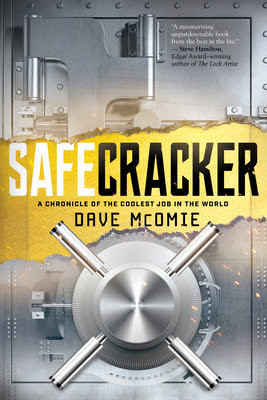
Safecracker: A Chronicle of the Coolest Job in the World, by Dave McOmie

This book was one I found browsing the nonfiction shelves at the library. It just seemed interesting, so I grabbed it. I'm glad I did! It was a good read. My 14 year old read it as well and also liked it.


Safecracker: A Chronicle of the Coolest Job in the World, by Dave McOmie

4 stars: Enjoyable, fast read.

 Dave McOmie's job is to break into safes and bank vaults. If the combination goes missing or has been forgotten, if the time clock gets wound too tight or something gets stuck, Dave gets a call and off he goes. He spends a lot of time travelling to his job sights, as most of them are far enough away to require an airplane flight. He has to bring his tools with him--drills, lots of extra bits of various sizes, and expensive scopes to look into the holes he has made. It's often a timed or high pressure situation. 

Between jobs, Dave is a dedicated family man and a philosopher at heart.

* * * * *

I found this fascinating. His job is one that rarely crosses my mind--but then again, I have never needed a safecracker. The book takes the form of "A Week in the Life," going day-by-day through the jobs required. He also tells stories of other jobs he has done, people he has worked with and for, and throws in some philosophy here and there. I enjoyed getting a glimpse into his life and perspective.  


Content: A little profanity, plus a couple of the safes had x-rated contents, which were mentioned but not graphically described.

February 10, 2022

Educated, by Tara Westover

So, I just now got to this book. I know. It has been around and talked about so much since it came out. I have wanted to read it this whole time, just not so much that I persisted in seeking it out. Then at our last library visit, there it was sitting on an end cap. Yep, now is the time. Snatched it right up! 

As much as I use my Kindle and read online now days, there's a serendipity, a found delight, about going in person to a library that a virtual experience just can't replicate. 

I am a shelf browser by nature. Sometimes I have specific books that I am looking for, but even in that case, I always just happen to see 3 or 4 others nearby that come home with me.  I always check the displays and the "New" bookshelves, too. 

Sometimes I don't even know what I want, so I just wander and see what catches my eye. Then when something does--it's free to take home! Just not the same on Amazon.

Anyway...to the review!


Educated
, by Tara Westover

4 stars: Sad, disturbing, inspiring. So many things to think about with this one.


Tara's experiences growing up in rural Idaho, the youngest child in a family of far-right survivalists. She was "homeschooled," which included very little actual book learning and a whole lot of working for her dad in the junkyard. Her parents didn't believe in doctors, so even ghastly injuries were treated at home with herbal remedies. They believed the government was evil, and guns were good.

This is her journey toward breaking free from the constraints of her upbringing and coming into a new and different understanding of herself, her family, and the world.

* * * * *
So many thoughts about this book. Lots to unpack here. I should start by saying that I've got a lot of family in the little towns in Idaho that she grew up in and near, including my parents, plus aunts, uncles, and cousins on both sides. I did not grow up there but have visited countless times over the years. That connection made Westover's experiences extra interesting and poignant to me. 

In addition, I am also a member of the Church of Jesus Christ of Latter-day Saints. I could relate in that way to her story, though not all of the doctrine as she talks about it matches up with what I believe or was taught. She was homeschooled. I am currently homeschooling our 4 children. They were survivalists. We consider ourselves to be prepared, but I wouldn't go so far as to call us preppers. However, there were some similarities there.

One way we diverge widely from her family is belief in government and the medical establishment. They feared and resented both. We do not. My husband is a doctor! We don't love the government, but we do what we must to get along with it. Along those lines, some of those injuries--wow. The doctors I know--including my husband--don't claim to have all the answers, but they do use proven methods and medications. How many problems could have been taken care of if their various ailments and injuries had been treated? First and foremost, her dad's mental illness. That alone could have changed the whole trajectory of all of their lives.  

Her father rules over the family. It was hard to read about him claiming to have received revelation for his family but with ideas that led them further into extremity. For instance, at one point he decided that dairy products were evil, so they got rid of all of theirs (Tara would slip down the hill to her grandparents' for cold cereal and milk in the mornings.) The shootout at Ruby Ridge was a story told over and over to the children and they felt a real sense of fear: if it could happen at Ruby Ridge, they could be next. So many decisions based on fear, but under the cover of faith.

Tara also recounts physical abuse at the hands of her older brother, and another brother who got out and went to college against all odds. When she finally did make it to college--also against great odds--her ignorance and different upbringing made so many things hard for her. Her family vehemently denies (to this day, according to my mom), that any of this happened the way she said it did.  

I thought her account was even handed. She tried to show the good as well as the bad, even as at times she doubts her own memory. It sounded like neither set of grandparents believed the same way Tara's family did. Her one grandma-down-the-hill tried to take her away with them to Arizona for the winter, to go to public school there. Even her abusive brother protected her sometimes and saved her life from a runaway horse at one point. 

Her observation towards the end, of the chasm that has split their family--between her and 2 brothers who left and the ones who stayed--was especially telling. Those who left all have PhD's, none have returned to live in Idaho, they are mostly estranged from the others. Of those who stayed, none have a high school diploma, the boys and son-in-law work for their dad in the junk business, or for the mom in her essential oils business. Back at home, the drama and dysfunction goes on, while Tara and the other 2 seem to have found a measure of peace away from it all. 

My recurring thought throughout the whole book was: how was this allowed to go on? How did these kids slip through the cracks? Obviously, homeschooling had a lot to do with that--there were no teachers checking up on them or calling CFS--but these are warm, close-knit communities. How did no-one in her church ward notice what was happening? Or maybe they did or made attempts to help but she just didn't include that? Or her parents were just really good at putting on a good face, maybe? So many questions. They were pretty much estranged from most of the extended family, it sounds like, with strained relationships between her parents and grandparents on both sides. I don't know. How? That's what boggles my mind. 

Finally, having read this book, I can understand my mom's hesitation when I told her we would be homeschooling our kids! If this type of homeschooling was all I had ever heard about, I would be very concerned as well. 

Now I need to go call my cousins. 

Content: A few cuss words, plus some very graphic descriptions of horrible injuries. Seriously, they would keep me up at night if I let them. 
 
(January 2022)

February 8, 2022

The Least of Us: True Tales of America and Hope in the Time of Fentanyl and Meth, by Sam Quinones

 This one is by the bestselling author of Dreamland, which I have not read. 


The Least of Us: True Tales of America and Hope in the Time of Fentanyl and Meth
, by Sam Quinones

4 stars: Eye opening.


Quinones details the drug scene in America, from the early 2000's, where heroin and cocaine were the biggest drugs on the streets, to now, with the rise of meth. He also talks at length about the Mexican drug cartels and when they made the switch from farmed drugs, like opium to lab-made, synthetic drugs which encompasses fentanyl products and meth. 

Along with all of that, he shares personal stories from several people who have been affected by drugs, and what a few communities are doing to fight back.

* * * * *
Wow, this book really brought things to light that I did not know about. The picture it paints of America is sobering, to say the least. Depressing, even. Drugs and cartels and synthetic chemicals made in China and shipped to whoever wants to make their own drugs to sell from home. It's a lot. 

I'm glad I read it, though. This is happening. In my town, and in yours, whether the families being affected have broken through the shame to talk about it or not, it's happening. We're all seeing the aftermath of it--although it's not really aftermath, because it's ongoing. Just the havoc, I guess, is the better way to put it. Kids flooding foster care because parents are too doped up to take care of them. Homelessness exploding, drug overdoses killing more people than covid in the first half of 2020.

He doesn't just leave it there, though, which is the strength of this book. He shows a way forward. Communities coming together to treat addicts. Judges and policemen keeping them accountable and giving them the push towards sobriety. Safety nets in the form of counseling, rides, help finding jobs, and more, coming into play. 

Sometimes it's not enough. Drugs are strict taskmasters, and the new forms of meth and drugs mixed with fentanyl are worse than they've ever been: more potent, more addictive, more deadly, more brain-damaging. I felt a determination to find solutions. As he says several times in the book, (paraphrasing here), no longer can we wait for addicts to hit rock bottom to seek help. In these times, rock bottom is dead. 

Definitely not a light read, but an important one.

Content: A little bit of language, descriptions of drug abuse and violence.

 (February 2, 2022)

May 1, 2021

All Thirteen: The Incredible Cave Rescue of the Thai Boys' Soccer Team, by Christina Soontornvat


All Thirteen: The Incredible Cave Rescue of the Thai Boys' Soccer Team, by Christina Soontornvat 

* 2021 Newberry Honor
* 2021 Robert F. Sibert Honor

5 stars: Excellent writing, on this incredibly high-interest topic. Very well done.

I remember when we first read the news articles about the Thai boys' soccer team that was trapped in a flooded cave. We were riveted, and horrified. From then on, we searched out any articles we could find and eagerly read the latest news and attempts to rescue them. We prayed for them as a family, every day. We were so worried about them. When we heard about the successful rescue, we were so happy and thankful. 

As soon as I heard about this book, I knew we needed to get it. I was not disappointed! I read it first, in one sitting. Then my oldest two children took turns reading it. This had all the answers to the questions we had asked each other those long months ago. It filled in the details that the news story didn't know or didn't share. It had pictures and background information on the boys, their coach, the rescuers, and other pivotal people involved. We learned how the cave flooded so quickly and why they couldn't just wait until the water drained away. We learned how they survived, physically and mentally, for so long. We learned about the rescuers, including the Thai Navy Seal who lost his life in the cave.

The sheer number of people involved in the operation was incredible to read about, especially all those who took it upon themselves to help in any way they could, with no thought of reward. And the way they finally came up with to bring them out, sedated. It was truly a miracle that it worked.

It was everything I could have hoped for in a book about this incident. We are going to buy this book for our own library. 

* * * * *

Were you as invested as we were in this story? Have you read the book? If so, what were your thoughts? 

April 2, 2021

Companion Reads: Longitude, and Carry On, Mr. Bowditch

 We read two books back to back in our morning reading time (for homeschool), which proved to be great companion reads. They both had to do with sailing and in particular, navigation at sea. Longitude, by Dava Sobel, was nonfiction, while Carry On, Mr. Bowditch, by Jean Lee Latham, was historical fiction. We understood the troubles of Nat Bowditch so much better, having just read an entire book about finding "lunars" vs. other means of calculating longitude, and even knew some of the technical terms.

If you have access to both of these books, give it a try and let me know if you liked it too!


Longitude: The True Story of a Lone Genius Who Solved the Greatest Scientific Problem of His Kind, by Dava Sobel

3.5 stars: Thorough and meaty. 

This one has been on my shelf for at least 5 years. I finally decided to read it to my kids as a way to make it first priority for me as well. Ha! It worked! We made it our way through it, a little each day.

For hundreds of years, the "longitude problem" was the bane of every sailor and captain's existence. It was easy enough to determine which latitude your ship was at, while at sea, but longitude was a whole different beast. Many, many ships sunk and thousands of lives were lost over the centuries due to mistakes in calculating longitude.

Finally the British throne came up with a competition, complete with a hefty award for whomever could solve this problem in a satisfactory way. There was a board overseeing the competition, which ended up going on for a couple of decades. The board members not only received the entries, but they were in charge of testing their accuracy and viability, and perhaps most importantly--doling out the prize money.

For a very long time, prevailing opinion was that the longitude problem would be solved by astronomy. Calculating "lunars" and/or the positions of certain stars became the basis of that school of thought. Then there was another idea completely: using a clock. It would have to be a clock like no other, however. It would have to keep nearly perfect time at sea, despite the constant motion of the ship, and have to be impervious to moisture and salty air.

As far away from astronomy as the workbench from the observatory, this idea was looked down upon by the Board as being almost too practical. Longitude was the realm of mathematicians and scholars, not something that could be solved with raw materials and rough hands--no matter how intricate the arrangement of gears and springs. It took the clockmaker in question--John Harrison--most of his life to perfect his creation and receive his just rewards.

* * * * *

This was actually a good read aloud for school mornings. I mean, I definitely felt smarter after reading it each day! Ha! Truly, though, it gave us some great fodder for discussion. We took it in smaller chunks, and although my kids weren't necessarily clamoring to keep reading each day, it got our minds working first thing in the morning, which was a good thing. That being said, this is definitely geared towards adults. I am fairly certain none of my kids would have picked it up to read on their own--or stuck with it, for that matter. It's well written, but it's got a lot packed in there.

Fascinating subject, really. There's so much that we take for granted about our modern life. GPS systems, anyone? Amazing how one person can make such a difference. One person approaching a problem differently, seeing a unique solution to the problem, then using his skills toward the solution, persisting through setback after setback. 

That was the biggest takeaway for me: do what you do best, persist through failure, and you will make a difference. It may not be solving the biggest problem of your time, but then again, maybe it will be. 

Now we want to take a field trip to go visit the sea clocks! 


Carry On, Mr. Bowditch, by Jean Lee Latham

* Newberry Medal winner in 1956

3.5 stars: Great way to visualize and bring to life the history we read about it Longitude.

Nat Bowditch grows up in a family that has fallen on hard times. His father, Habbukuk, used to be a sea captain until his ship was dashed into pieces. Since then he has become a cooper, but has never gotten past his failure at sea. There are many children and only just enough food and clothing to go around. He learns early (from his big brother Hab) to pretend like he doesn't feel the cold in the winter when he doesn't have a coat to wear.

Nat loves mathematics, which makes him unique in his family and at his school. His mind just takes to it, and he can understand and work out complicated problems from a young age. He has dreams of going to Harvard after school. Then his father indentures him to the ship chandlery in town for 9 years. Nine years! His life is over!  Or so he thinks. He doesn't realize it is the start of a lifetime of learning and opportunities. Also, he finally gets enough to eat and warm clothes to wear.

* * * * *

We read this book right after Longitude. It was a great tie-in to all the history we learned about in that book. The problem of finding longitude is one of the central themes of the book. Apparently this was the time period when chronometers (sea clocks) were available, but still very expensive, so most ships still used lunars--which involved taking the position of the moon in relation to certain stars and calculating longitude based on that. Nat's mathematical skill enables him to work "lunars" with extraordinary accuracy, and he even ends up teaching all the men he's sailing with how to work them as well. We highly appreciated the digs at Nevil Maskelyne, who was the rival and enemy of the clockmaker in our nonfiction book. So that part was fantastic.

I feel like the book was probably as accurate as historical fiction can be, so it was good to get a feel for what it would have been like to live back then, in a sailing town.

Here's the thing: so many people died! At first, it was a bit of a blow as we read along. By the end, my kids were taking bets on who was going to go next. It was so bad! I will not name names, but I will just say--do not get overly attached to any of the characters, particularly those who are closest to Nat. Since it was the story of a good portion of his life, the deaths are mentioned in a rather abrupt or cursory manner, then after a paragraph or two we're moving on.

Edited to add: We are not as heartless as we may seem. None of us realized as we read that Mr. Bowditch was a real person. That poor man! Wow. He overcame a lot of suffering. I can't imagine the author would have included all of those deaths if they hadn't really happened. It makes his accomplishments that much more incredible.

Favorite sayings: 

"sailing by ash breeze" --this comes up throughout the book, but it's explained early on. When a ship is becalmed, the only way to move forward is by "ash breeze," meaning--get out the oars and row! The oars were usually made of ash wood. Nat spends most of his life sailing by ash breeze, finding his own chances for learning, and studying on his own--everything he can get his hands on--as his hopes and dreams take a very long time to realize.

"she has eyes in the back of her heart" 

"I'm just like a chair you stumble over in the dark," Elizabeth said. "It isn't the chair's fault, but you kick it anyhow." ... "Your brain. It's too fast. So you stumble on other people's dumbness. And--you want to kick something." 

February 16, 2021

For the Armchair Adventurer

 Two of the books I've read recently have been about daring and adventurous escapades: Mystery of the Nile and Mountain Rescue Doctor.

Mystery of the Nile: The Epic Story of the First Descent of the World's Deadliest River, by Richard Bangs and Pasquale Scaturro

4 stars: My inner armchair adventurer was satisfied.


Many people have attempted to go down the entire length of the Nile River, and several have died in the attempt. Pasquale Scaturro and his little band of explorers finally made it!

They started way up in Ethiopia, where it was really just a trickle, down spectacular and dangerous waterfalls and rapids, and past crocodiles, hippos, bandits, and soldiers.

* * * * *

This was a great read, especially coming on the heels of our homeschool study of Ancient Egypt, and the surrounding regions. The adventure wasn't all exciting rafting through dangerous waters. A good portion of it was baking hot and boring, with the main threat coming from Sudanese militia and river side bandits. 

It was interesting to get a glimpse of the interpersonal dynamics of the group, as well. Shared danger doesn't necessarily bring about close friendships, and Bangs pulled no punches discussing the problems that came up between Scaturro and his fellows. Satisfying ending, though--realizing that reaching an enormous milestone like that is as much a mindset as anything else. Preparation and the right equipment can only get you so far. At some point you may need a "fixer" to get you signatures or the needed paperwork, or just the wife of a inn owner that knows a general. It wasn't all just physical skills needed, is what I'm saying. People skills, negotiation, keeping your team from throwing each other to the crocodiles--all of that was part of it, too.

Content: Some language.


Mountain Rescue Doctor: Wilderness Medicine in the Extremes of Nature, by Christopher Van Tilburg

4 stars: Stories to talk about with my teenager.


Tilburg has forged his own path in the medical community, combining a love of outdoor sports with opportunities to help people in trouble. An ER doctor as his "day job," plus an avid hiker, biker, and skiier himself, he is well prepared physically and mentally for the rigors of rescuing those who have slipped or strayed off the beaten path. 

Exciting stories of his work up in the mountains. Extremely challenging situations and dedicated volunteers at the ready for those who get hurt or sick or lost. Reading this, I was so grateful for Tilburg and others like him, who are willing to risk so much to help people that cannot help themselves.

My oldest son read this at the same time as me, and we had a good time talking about the various stories.  


February 2, 2021

Salvation on Sand Mountain, by Dennis Covington


Salvation on Sand Mountain: Snake Handling and Redemption in Southern Appalachia, by Dennis Covington

4 stars: Gritty and honest.


Covington originally went down to Scottsboro, Alabama, to cover the trial of snake handler Glenn Summerford, a man accused of trying to kill his wife by making her stick her hand into a cage of live rattlesnakes.

His brush with this offshoot religion fascinated him. He went to a service or two. He began getting to know the believers. As he went further down this path, he even researched his family history. He felt such a kinship with these people--something more than could be explained away as a bystander. 

What began as a journalism assignment ended up as a soul-searching journey.

* * * * *

I've had this one on my shelves for a long time. I can't even remember when I read it last. A conversation with my kids reminded me of this book, and I decided it was time to re-read it. It raised so many questions in my mind; questions about the ins and outs of this faith and the people who practice it. That's one reason I liked it. I'm still pondering on it a couple of days later.

Covington's account is compelling. I am a religious person. My expressions of faith are very different from those of the snake handlers. This book makes me wonder, though, how much we might have in common, if we were ever to sit down and have a deep conversation together. 


For older teens and adults. 

January 25, 2021

Bonds That Make Us Free, by C. Terry Warner

 I've had this one on my bookshelf for a very long time. I picked it up again last month, and read it every now and then until I finished it.


Bonds That Make Us Free: Healing Our Relationships, Coming to Ourselves
, by C. Terry Warner

5 stars: The truth will set you free

Warner talks about negative emotions, and the ways in which we justify ourselves--which causes us to come up with the emotions to match the story we've made up. This book also covers collusion in a relationship, and other destructive cycles. Most importantly, it gives you tools to look at things with a fresh, truer perspective, that will change your relationships--if you let it.

Here's the power of this book: One time in particular, I was frustrated and resentful at something that my husband had said to me. I went upstairs and read this book for 10-15 minutes. In that time, my perspective shifted and I could see myself clearly, and my own part in what had just transpired--particularly my true motivations and justifications. The frustration and resentment melted away and I felt humble, contrite, and more loving towards my husband.

Your husband, your stubborn 3-year-old, your annoying coworker--none of them have the power to make you mad. None of them cause you to feel a certain way. You create those feelings, every one of them. That may be disheartening at first, but really, it's a source of great hope and freedom. If you've created those feelings, you can choose to create different ones. The way to do that is to see the people and relationships in your life through a more clear lens. Once you see the truth, and take ownership in your own part of the problems, the issues often resolve themselves.

I found it to be powerful and very helpful. This is one I feel like I should re-read once a year to get my head (and heart) back in the right place. 


Have you a great book on relationships lately? Do tell!  


December 8, 2020

The Riddle of the Labyrinth, by Margalit Fox

I just re-read a book, that was on my kindle. I don't remember reading the first time at all! It was 5 years ago, which I only know because I wrote a review of it on Goodreads (below)! I'm laughing at myself here, because the big reveal at the end--which language was it on the tablets?--came as a complete and satisfying surprise the second time around, too. Hoo boy! 


The Riddle of the Labyrinth: The Quest to Crack an Ancient Code, by Maraglit Fox

3 stars

 The story of American linguist Alice Kober's work to crack the code found on ancient Cretan tablets. As it was an unknown script in an unknown language, it was the hardest type to even attempt. Kober's efforts became the stepping stones used by Michael Ventris to solve the puzzle later. She has been largely left out of the narrative, thus this book.


I enjoyed learning about cryptography, and about the Linear B script in particular. The lives of the principal characters were also very interesting.

Just the kind of narrative nonfiction I like.


This time around, I would up that rating to at least 4 stars, if not 5. It was fascinating (again--ha!) to read about how linguists can figure out what ancient scripts say. Even more so, I would say, because in our homeschooling history lessons right now we have talked a lot about the hieroglyphs of Ancient Egypt. We read a whole book together on the Rosetta Stone and Champollion, the French man who figured out the language of the hieroglyphics. 

With that new background fresh in mind, I was particularly interested in Fox's discussions on the different types of written languages. Some use alphabets, where one character stands for one sound. Some are syllabary (may have spelled that wrong), where one character stands for the sound of a syllable; some are iconographic, where each word is written with a different symbol or picture; and some are mixed. Looking at a ancient tablet with what has to be writing of some kind on it, though, how in the world do you figure out which it is? 

As in the case of Linear B, you may not only need to figure out which type of language you have, and what all the sounds mean, you may have to figure out which language is actually written on the tablet. That is, if it's even a known language on there. Along with that, there are so many other things that we take for granted with our known languages written in known scripts: do you read it left to right, or some other way? What are the rules of the language--grammar or otherwise?  So you start to look for clues. 

The linguists who work on these ancient languages have to have immense amounts of patience and attention to detail. Kober's work was truly incredible, and it was work! She wrote every character down on homemade file cards (paper was scarce due to the recent war), and then noted where it was in relation to other characters in every word. She had boxes and boxes of little cards by the time of her untimely death. Armed with all of that information she had gathered, she was able to draw up tables of the characters in relation to each other. Her tables are what Ventris based his work on, which finally deciphered the code.

Anyway, we had some great discussions about ancient languages, and what clues are left behind in the language itself for the linguists to track down, like following a rabbit trail in the dark woods on a snowy night. The lives of the principle characters also gave us some good fodder for discussion. 

Next, I think we may try our hand at writing messages in an ancient language. There are several books that have examples of hieroglyphics, for example, that would give us a good start.
  

November 23, 2019

2 Books to Add to Your Gardening Reference Shelf

 It’s been awhile since I have done a book review on this blog. It’s high time! Two books that I have read lately and found useful would both fall under the “reference” category for gardening (surprise, surprise).

Two of the biggest problems we have faced since starting our little flower farm have been the same that farmers have faced for centuries: pests and weeds. With both of them, though, you can’t know what to do about them until you know what you’ve got. While you may be able to take a good picture of a weed (they don’t move around much, after all), it can be difficult to snap a shot of that little creature scurrying under the nearest leaf.

Unfortunately, it also seemed like the solution to one of the problems only made the other worse. For instance, this summer I thought I would use cardboard in the pathways to keep the weeds down. That worked pretty well, all things considered, but all that cardboard being held against the ground? The earwig population exploded! I hate earwigs, so bad. So yeah—what am I supposed to do about that?!

I have not reached for the RoundUp or the insect killer (yet). I am trying to farm sustainably and with the health of our family in mind—I don’t want any of my kids coming in contact with that stuff!

So, enter these 2 books. Some clarity, some help, and I hope—a better year next year when it comes to bugs and weeds!

Good Bug Bad Bug: Who’s Who, What They Do, and How to Manage Them Organically, by Jessica Walliser

5 stars: Useful information, in an easily accessible format.

So, this one immediately addresses one of the main problems of bug identification: the sheer numbers involved. It can be overwhelming even trying to look up an insect, because where do you even start? She has boiled this down to 41 different common insects: 27 pests and 14 beneficial.

She starts with the pests. Each one has the name, a description, a picture, plus “Spot the Damage” and “Plants they Attack.” She then has a second page for each one that lists “Live Biological Controls,” “Preventative Actions,” and “Organic Product Controls.” There’s also added information at the bottom, as well as another picture—often showing the egg or larvae stage of the insect in question.

In the section covering beneficial insects, it starts out the same, with the name, picture and a description. She then describes their “Life Cycle,” “Pests They Control,” and includes a section on “How to Attract and Keep Them.” Each entry also contains a “More About…” section with interesting facts.

This book has already been useful to me, just thumbing through it. I found out within less than 5 minutes that the white cottony/sticky bugs on my houseplants are mealy bugs, plus what I can do about it (remove them with a Q-tip soaked in alcohol.) It’s got a spiral binding inside a hard cover. I’m planning on taking it out to the garden with me next summer and getting some things figured out!


Weeds and what they tell us, by Ehrenfried Pfeiffer

4 stars: What if weeds were not the enemy?


This a book from the 50’s, but the information was fascinating. Pfeiffer’s perspective on weeds is game-changing. Rather than declaring war on every weed you see, use them as soil indicators. Certain weeds prefer certain soil conditions. This is an idea I first ran across as I have learned more about permaculture. If you have lots of ox-eye daisies, for instance, that’s a warning flag that your soil is increasing in acidity. Fix the soil, your weed problem disappears.

One thing I found interesting is that a good number of plants he lists as weeds in this book are now grown by flower farmers for cutting! Larkspur, chamomile, feverfew, and Dauca carota (wild carrot), just to name a few. Also, he describes which plants bring minerals or vitamins up out of the soil. For instance, he mentions that tansy (which I just planted this fall) concentrates calcium in its leaves. So if you can cut them before they produce seed, they will add many nutrients to your compost pile. I have been so afraid of seeding my entire with garden with weeds, that I haven’t put any weeds into my compost pile. This has given me something to think about along those lines, for sure.

Also, I found out via soil test last spring that my soil has excessive amounts of phosphorus in it. I think he said (though now I can’t find the reference) that orach pulls phosphorus out of the soil. There are several varieties of orach that other flower farmers grow as filler! So guess what is going on my seed list?!

Advice is heavily geared toward tilling, which many people are trying to get away from now. We have still done it, but I think the information in this book can dovetail with a no-till approach. That’s what I would like to move toward. It sounds like, though, whenever you start a new bed—particularly one on weedy ground—tilling at the beginning can really help set back your weed problem. Don’t quote me on that; I need to do more research on permaculture and no-till farming.

I bought this one as an ebook, and to be honest, I’m kind of wishing I had a hard copy to mark up. I know, I know, I can highlight and make notes in an ebook too. I just prefer it on paper. Call me old school—-HEY, maybe that’s why I liked this book so much! Ha!


What have you been reading lately? Anything worth sharing? 

July 13, 2019

Mini Theme: True Medical Mysteries

I really enjoy books where a medical case is presented, and then the doctor has to try to figure out what in the world is going on with that patient. The hope is, of course, that they do figure it out in time to save the patient. True stories--just to be clear.

If this type of book sounds interested to you, read on! I have a handful to get you started.


Every Patient Tells a Story: Medical Mysteries and the Art of Diagnosis, by Lisa Sanders

4 stars: Problems and perils of diagnosing patients, with interesting case studies to back up her points.

As the title would suggest, this book is from the POV of the doctor. Sanders says in the introduction that she hoped to put readers right there at the bedside, with the clues (symptoms) presented and the knowledge or lack thereof that the doctor has to go on in order to find the correct diagnosis. As such, it is broken into sections based on the parts of a physical exam: the patient's history, the actual physical exam, technology/testing, and what she calls "Limits of the Medical Mind." Each section has chapters within it delving into more detail about the various aspects of that method of diagnosing patients, along with case studies of real patients.

* * * * *
I found this one fascinating. Then again, I also like to read my husband's medical journals when they come in the mail. There are so many variables standing between the sick patient and the saving treatment, including: the way they tell their story to the doctor (do they leave out crucial details or tell so much that the important stuff gets lost), what symptoms are presenting at the time of the exam, what the tests show or don't show, and so on.

I was reminded again of the importance of networking amongst doctors. Many of these difficult cases were solved by the doctor/s calling up a friend who was a specialist in that field, or even just another doctor with a lot of experience, and running the case by them to get some feedback. Often it was the collective memory of knowledge that came to the right conclusion, more so than one particular doctor.

(3/12/18)
If you liked this one, I've got 2 more for you!

The Medical Detectives, below, is more about epidemiologists figuring out what has caused clusters of severe illness, rather than individual cases, but still fascinating.


The Medical Detectives, by Berton Roueche

3 stars: Stories you'll want to tell someone else about! (Though maybe not over dinner...)

A compilation of 25 different unusual medical cases. A handful are presented as the doctor trying to figure out what could be causing certain symptoms, but with most, the disease is known and it's up to epidemiologists to track down the specific cause along with who else might be affected--or infected, as the case may be. 

Somewhat uneven writing between chapters, with some very slow and tedious to get through (particularly the chapter about aspirin) and others high interest to the end. Since they span decades, I suppose it was to be expected. 

I ended up retelling many of the stories to my kids. They clamored for more! In fact, my 8-year-old picked it up to read on his own, but got bogged down a chapter or two in. I guess you can tell there's a strong medical influence in our home! 

Also, wash new clothes before you wear them. Just...do it. Please. Thank you.

(01/06/17)


It has been almost 10 years since I read this one, so I can't tell you what angle it takes. I do remember that I liked it--perhaps this was the catalyst to my seeking out these others!


The Man Who Mistook His Wife for a Hat and Other Clinical Tales, by Oliver Sacks

4 stars: Fascinating.

I had to keep discussing the case studies with my husband just to be able to tell someone. I would recommend skipping all the introductions (there's one for each section), unless you're very interested in the author's research and networking with other doctors.

**My reviews were much shorter back in the day! :)

What have you read that would fit in with this Mini Theme? I'm always up for another!

April 27, 2019

Cool Flowers, by Lisa Mason Ziegler


Cool Flowers
, by Lisa Mason Ziegler

5 stars: A book I have come back to again and again.

You knew this was coming, didn’t you? My fan-girl gushing about this lady and her wealth of knowledge might have been a clue for you! 


Pansies were my first clue that this book may be a key resource for me. I’ll tell you why. Pansies love it cool, or even cold. Therefore, I wasn’t too surprised when they survived the winter last year (and this one too.) What really surprised me was how well they did all summer. Usually they will just fade into nothing when it gets really hot, but they kept on blooming prolifically all summer long last year! 

Look how gorgeous these pansies are—this was taken in August! 

High summer heat and they were thriving.

I live in a mountain valley, and I know elevation has an effect on frost dates and USDA frost hardiness zone and such. However, technically I am in the same zone here (5b) as I was in Washington state, and my pansies never survived a summer there, unless they were in full-on shade! These were not, by the way. Mostly sun, as a matter of fact.

So I decided to go really big for what Ms. Ziegler calls “cool flowers,” another name for hardy annuals. These are flowers that actually prefer cooler weather. Many of them will either winter over, if started in the fall, or can be started VERY early spring to pump out blooms before most other flowers have even woken up!

So I thought if the pansies are making it all summer long, maybe some of the other cool flowers will do just as well! At least, that’s my hope. In fact, the 2 flowers that did the very best in my garden last year were also cool flowers: bachelor’s buttons and Bells of Ireland. Like the pansies, they bloomed all summer long for me. I think I’m on to something here!

Bells of Ireland, July 2017

Here’s an incomplete list of the hardy annuals she covers in the book: Ammi (Queen Anne’s lace), bachelor’s buttons, Bells of Ireland, black—eyed Susan, dill, feverfew, foxglove, poppies, pincushion flowers, and so on. Some of my favorite flowers are on that list! Each flower gets its own page with tips for seed-starting, winter-growing strategies, and a section called “Keep the Blooms Coming.”

If that was all she covered this book would be a valuable resource. In addition to the individual flower facts, she also has chapters devoted to the life cycle of a hardy annual, seed starting, healthy soil, etc.

Full-color photographs, tips, and sidebars, offer even more information.

Some of my flower farming books are a one-time read, or maybe an occasional second look. This is one I have gone back to time and again. I also recently took Lisa’s seed starting course and it was fabulous.

She has a website with videos, online classes, a shop, and more, called The Gardener’s Workshop..

If you have this one (or get it) tell me: did it open your eyes to a whole new world of flower planting? 

March 2, 2019

The Truth About Organic Gardening, by Jeff Gillman


The Truth About Organic Gardening, by Jeff Gillman

5 stars

A fair and open-minded look at the various methods for controlling weeds and pests in the garden.

I found this to be a very clear-eyed look at what we’re putting on our soil and plants. From the title, you might think this book is some sort of expose on organic gardening practices. That is not the case. Gillman is a big proponent of organic methods. However, not all organic practices a) actually work, or b) are harmless to the environment. While many of the synthetic products work very well, there are generally big drawbacks when it comes to how they effect the ecosystems in which we live.

Gillman is (or was—it’s 11 years old) an associate professor of horticultural science at the University of Minnesota. All of that to say that he has had experience either using or studying all of the products and methods he covers in this book. In the book, he goes through several types of weed and pest control methods, and as the subtitle suggests, comes up with benefits, drawbacks, and a bottom line for each. He discusses what each is made of, how effective they are at what they claim to do, and the effect they might have on beneficial plants, bugs, and the health of the soil. He backs up what he says with research. He even includes several methods that would fall into the realm of “old wives tales.”

I would call myself MOSTLY an organic gardener. As a general rule, I reach first for my weeding fork and gloves when confronted with problems in my flowerbeds. I am a fan of compost and mulch. I don’t want to worry about my kiddos getting poisoned from playing on the lawn or eating unwashed vegetables out of our garden.

However, there are some situations where I am ready to admit defeat! My back corner flowerbed is so full of bindweed that it’s about to choke out everything else. I weeded that bed so many times last summer! (Bindweed laughs at weeding. It THRIVES on weeding!) Every time I planted something back there, I sifted through the dirt to get out every tiny scrap of bindweed root I could find. It helped—in that one spot—for about 3 weeks. Then the bindweed was back, bigger and bushier than ever.

In other situations, I have removed everything I wanted to save from a flowerbed, dug out all the weeds, and then put all my good stuff back in. That’s not going to work with bindweed. It’s roots can go down 10 feet. ANY piece of root that gets left in the ground can grow a new vine. If you let it flower and go to seed, good luck to you. I admit, I’m feeling rather desperate. Letting the bindweed win is not an option! I don’t have the time in the summer to weed that flowerbed on a bi-weekly basis to stay on top of it.

So what’s a mostly organic gardener to do? If I go over to the Dark Side and pick up that RoundUp bottle, how bad is it going to be? This is such a hot-button issue these days, that it’s difficult to get advice from other people without stirring up a big argument. It can be hard to sift through passionate opinions to get to facts.

This is the point where I got out this book. Gillman spells it out. You have to be very careful in its application (I knew that), because it kills ANY plant it touches. However, used sparingly and in accordance with the directions, it’s a lesser evil in the world of weed killers. It is very effective. Residues stay in the soil for about 3 weeks.

Really, I think I can live with that. I plan to either put it on a sponge (wearing gloves, of course), and give each weed the swipe of death, or pull the bindweed up into a cut-off milk jug to spray it, in hopes of limiting the overspray.

While I had the book out, I also looked up neem oil (helpful for aphids on fruit trees) and the entire section on keeping out deer. Reading those chapters helped me remember to add “dormant oil” to my business shopping list, so there you go. Winner.

This is one I’m glad I have on my shelf at home as a reference.

September 21, 2018

Mini Theme: Off the Deep End

Of the book reviews I had yet to post, a handful of them had a rather dubious connection: characters that went off the deep end, taking others with them. Unfortunately, these stories all happened to be true. Yup.

It is fascinating to read about dysfunction--more so than happiness, I'm sorry to say. Unless the happiness has been hard-won after some bouts of misery. I had a writing professor say once that "Only misery is interesting." I suppose that has some truth in it.

So these books have their share of misery, coupled with some generous doses of mental illness. So if you find yourself drawn to these types of stories, dive in! Leave me a comment letting me know which was your favorite on the list.

p.s. Yes, the first one on the list was from nearly a year ago! High time to get this review published and out the door!


Shooting Victoria: Madness, Mayhem, and the Rebirth of the British Monarchy, by Paul Thomas Murphy

3 stars: Interesting, but very detailed; a bit long to get through in parts.

Did you know that there were 8 different attempts on Queen Victoria's life during her reign? I didn't either. In fact, there's a lot I didn't know about Queen Victoria prior to reading this book.

For each assassination attempt, Murphy goes into detail about the man who was behind the weapon. His background, family situation, previous employment, mental health, and much more. The steps and planning leading up to each crime were similarly brought forward, with a blow-by-blow account of each attempt at the climax.

Then we learn about what happened to each of the men, including their trials, and any incarceration or other punishment meted out. This leads into side discussions of the judicial system in England at the time, various prisons and their histories, and so on. Back to the main topic, we also see how Queen Victoria and Albert handled each incident, and the effect on the monarchy itself. Surprisingly, each attempt greatly strengthened the love of the people for their Queen and the influence of the monarchy itself.

I liked this one; it was a good read. I just had to take it a bit at a time and keep coming back to it. I didn't realize that Victoria and Albert had 8 children, nor did I remember that he died so young leaving her a widow. Their love story was neat to learn more about.

Though they were diversions off the main topic, I was also interested in the way the law changed over the years, to deal with these men. The original crime for "taking a pop at the Queen" was high treason, with life imprisonment if the Queen pardoned him, or hanging if not. It became clear over time, however, that some of the attempts were copycat crimes, or for notoriety rather than actually wanting to kill the Queen, or even as a ticket out of poverty at the expense of the crown (prisoners had their room and board provided, after all) and so on. So the law and subsequent punishments were changed to administer public shame and embarrassment, rather than death or life imprisonment.

If you liked this one, here are 2 more for you about the lives of royal ladies: To Be A Queen.


The Professor and the Madman: A Tale of Murder, Insanity, and the Making of the Oxford English Dictionary, by Simon Winchester

3 stars: Quite interesting.

Writing and compiling the definitions in the Oxford English Dictionary was a huge undertaking, spanning several decades, and eventually filling several volumes. The head of the project for most of that time, James Murray, decided on an extra thorough and time-intensive approach. He solicited quotations from the general public. The idea being that each quotation, from all types of literary and old texts, would show the various nuances of the word in question. The quotations then had to be read and checked and decided upon one at a time for inclusion into the OED or not.

So, in the meantime, there was a Dr. Minor, who suffered from hallucinations and delusions and who murdered a man based on these delusions. Dr. Minor was locked up in an insane asylum for this murder. It was, however, certainly not a padded cell. He had a sitting room and over the years procured quite an extensive library. He lived most of his life in this asylum.

During his incarceration, he heard the call for submissions for the dictionary. This type of quotation treasure hunt amongst his books was just what he needed to fill the long days. He became one of the most prolific contributors to the OED, and even would contact Murray at times to see what words were being worked on and if there were any in particular that still needed quotations. Murray didn't realize that Minor was in the asylum until many years into their correspondence.

* * * * *
I'm glad I read this one. I enjoy learning more about these niches of history that otherwise I would know nothing about. Now I want to go peruse the OED, though I doubt our small-town American library would have a copy.

Content: Many of Minor's hallucinations were sexual in nature. While not graphically described, I wouldn't give this one to my kids to read.


Pilgrim's Wilderness: A True Story of Faith and Madness on the Alaska Frontier, by Tom Kizzia

3 stars: Chilling, but with some hope at the end.

The Pilgrim family consisted of Papa and Mama, and 15 children. They moved up to the tiny Alaskan village of McCarthy, and proceeded to make themselves right at home. In fact, they set up living in an abandoned copper mine a ways out from the settlement, and began building a home, and making roads in to their place.

As far as anyone knew, they were God-fearing Christians, who all had a bent for folk music. They were quite charming in their homemade clothes, and the children were not shy about making friends and talking to the other folk in the town. They seemed like a happy, homeschooled, "back to the earth" type bunch, who didn't care what other people though about them.

The longer they lived there, however, the more trouble started sprouting up around them. It seems they didn't actually purchase the land they had settled on. Also, the National Park Service was getting pretty bent out of shape about the roads (bulldozed through federally protected land). When the NPS sent out a representative to start a dialogue about it, however, the Pilgrim family resisted mightily and vocally. McCarthy soon became split in its views as to whether or not the Park Service had the right to kick out the Pilgrims.

That wasn't the worst of it. The cracks began to show in the Pilgrim family's façade of brightness and goodness, too. The children more often than not appeared woefully neglected; and became downright surly to anyone trying to talk with them. People began missing things from their homes or yards, and there began to rumors flying about the living conditions up at the Pilgrim's homestead.

All was not right in the world of the Pilgrims and before it was all said and done, their story would be big news.

* * * * *
This book had me at "Alaska Frontier." I am quite predictable that way. Anything featuring my home state immediately perks up my interest.

This was quite the story. An entire family completely held captive, basically, by their father--a man who reinvented himself as needed to make his next conquest. A man who ruled his little kingdom with an iron fist, while claiming to have sanction from God. The worst kind of evil--evil that masquerades as God's will.

Those poor kids, growing up in a home rampant with all kinds of abuse and neglect. It goes most into the story of the oldest daughter, and what she did that brought everything to light. The author first came across this story as a reporter for the Anchorage Daily News.

I found the land use debate quite interesting as well. Though it was sparked off by this family's resistance to government "meddling," it was more of a backdrop to what was really going on with them.


Content: Physical, verbal, and sexual abuse. For adults.

(5/10/18)

* * * * *
Have you read anything lately that would fit my mini theme?
May 19, 2018

Mini Theme: Art Crime

I enjoy reading true crime, as long as it isn't serial killers or murder related. The books in this mini theme all center on art theft, or finding stolen art. This is a crime that happens all the time, with many of the pieces of art never being recovered. Part of the fascination for me with this, as well as other true crime I've read, is to try to figure out why a thief would choose this particular avenue for wealth. In the case of stealing artwork, it's a quandry, because the more well-known the art or artist has been, the more the piece is worth. On the flip side, the fame makes it extremely hard to resell down the line, unless the thief has connections with a private collector or something.

The teen and middle grade fiction books give a more light-hearted perspective to the whole thing.


Priceless: How I Went Undercover to Rescue the World's Stolen Treasures, by Robert K. Wittman with John Shiffman

4 stars: Packed with interesting stories.


Wittman founded the FBI's Art Crime team during his tenure there. In our country, stolen art is not nearly as big a deal to the general public as in, say, Italy or France. So it took some doing for Wittman to make this the focus of his FBI career. Though he battled apathy and bureaucracy, he was able to recover some amazing pieces of art.

Some of what he found and returned to their rightful owners were actual big-name paintings. All were important to history, like a battle flag from one of the few African American regiments in the Civil War, and an original copy of the Bill of Rights. Wittman found he had a knack for befriending the bad guys and getting them to deliver up the goods.

Along the way, it also becomes a memoir of sorts, as he talks about his growing up years, a tragic accident that affected his life for years, and his marriage and family. He tells of the successes, but also the times things went wrong--or nearly so. Through the years, he worked with agents from all over the world to recover missing art and artifacts.

* * * * *
I enjoyed this insider's look at the world of art crime and investigation. I couldn't believe a) how expensive some of this art is and b) how poorly guarded. Also, how easy to get these stolen items across borders. Once lost this way, it's anyone's guess who might end up with it--often mafia or mobsters of various stripes--who use the art for a type of currency. Wittman came very close to recovering the artwork stolen from the Isabella Gardner Museum in Boston, but you'll have to read it to find out what happened.

(3/19/18)


The Rescue Artist: A True Story of Art, Thieves, and the Hunt for a Missing Masterpiece, by Edward Dolnick

3.5 stars: An entertaining read.

Tells the story of the theft of Edward Munch's The Scream, from a prominent museum in Norway, right during the Olympic games held in Lillehammer. The Norwegians were deeply embarrassed and rather desperate to get their masterpiece back. Meanwhile, over in London, undercover policeman Charley Hill heard the news and decided he could find it.

Details the story of the search and recovery, but it also delves into Charley Hill himself, as well as Edward Munch, art history in general, and museum security (or lack thereof).

* * * * *
Whereas Priceless spanned a career, The Rescue Artist focused in on this one rescue mission. Charley's unique blend of belligerence, acting skills, and knowledge served him very well on this case. I found the side trails interesting enough, as well. I have never really liked the work of Edward Munch, but I was interested to learn more about him. He had some stuff going on, let me tell you. Most of it mental health related. Did you know he wasn't even well-known in his own time?

Of the two, I liked Priceless, by Robert K. Wittman better.

Content: Quite a bit of bad language.

(4/30/18)


Moxie and the Art of Rule-Breaking, by Erin Dionne

3 stars

So Moxie has a best friend named Ollie, and the two of them have an awesome summer planned out. Then a mysterious and mean redhead shows up at Moxie's door demanding things that Moxie doesn't know anything about. She has a pretty good idea who hid the things, though: her Grandpa. He helped some big-time crooks hide stuff back in the day--though he's been out of that business since she was a baby.

Moxie delves deeper into the mystery, and realizes that the missing items were stolen from the Isabella Stewart Gardner Museum and have never been recovered. Also, they are worth millions. Unfortunately, Grandpa is suffering from Alzheimer's and even if he weren't, is not at all likely to give up his hiding places or be okay with Moxie getting involved. However with redhead escalating the threats, both to her personally and to her family, Moxie feels that she has no other choice than to try to find the missing art herself. With Ollie's help.

I liked that this was based on a real unsolved crime, and I thought the hiding places were clever and believable. Geared for teens or tweens. Maybe a step up to offer kids who are fans of Blue Balliet's middle grade mysteries.


(Reviewed on Goodreads 10/06/2015.)


Under the Egg, by Laura Marx Fitzgerald

4 stars

Theo's grandfather died recently, and with her mother locked in a world of her own, it's up to Theo to take care of them both and the house. As he died, he told her to look "under the egg" for a letter and a treasure. Well, she's searched everywhere egg-related she can think of and hasn't found a thing.

Then she spills some rubbing alcohol onto the painting of an egg that had always hung in her grandfather's art studio. (She had taken it down to look under it.) The paint started coming off, to reveal something else entirely underneath. A different painting. A really old painting. Could this be the treasure he was talking about? Except, if it's an authentic painting by one of the masters of the Renaissance, does that mean it's stolen? By her grandfather?

Theo needs some help, and it's certain that her mother is not going to give it to her. She heads out into the city (NYC, that is), and ends up making some friends along the way to solving the mystery of the painting and the mystery of her grandfather's life.

Somehow I seem to be reading on a theme without planning it: art heists and the surrounding mysteries. I liked this one better than Moxie and the Art of Rule-Breaking, primarily because it had more depth to the backstory. I won't say any more than that, because finding out why her grandfather had this painting is such a big part of the story. 

(Reviewed on Goodreads 10-09-15)


* * * * *
Have you read any of these? What did you think?